The residents living along the ghats of the Yamuna River in Delhi are spending sleepless nights as fears of eviction loom large. The anxiety has been triggered by a series of recent demolition drives conducted by the Delhi Development Authority (DDA) at multiple locations across the city to clear what it deems ‘illegal encroachments’ on the Yamuna floodplains.
These actions follow several court orders directing the DDA to remove encroachments in order to protect the environment and restore the river’s ecosystem. The legal directives form part of a broader effort mandated by the National Green Tribunal (NGT) to tackle pollution and reclaim the Yamuna riverbed.
‘Demolition will erase centuries of religious tradition’
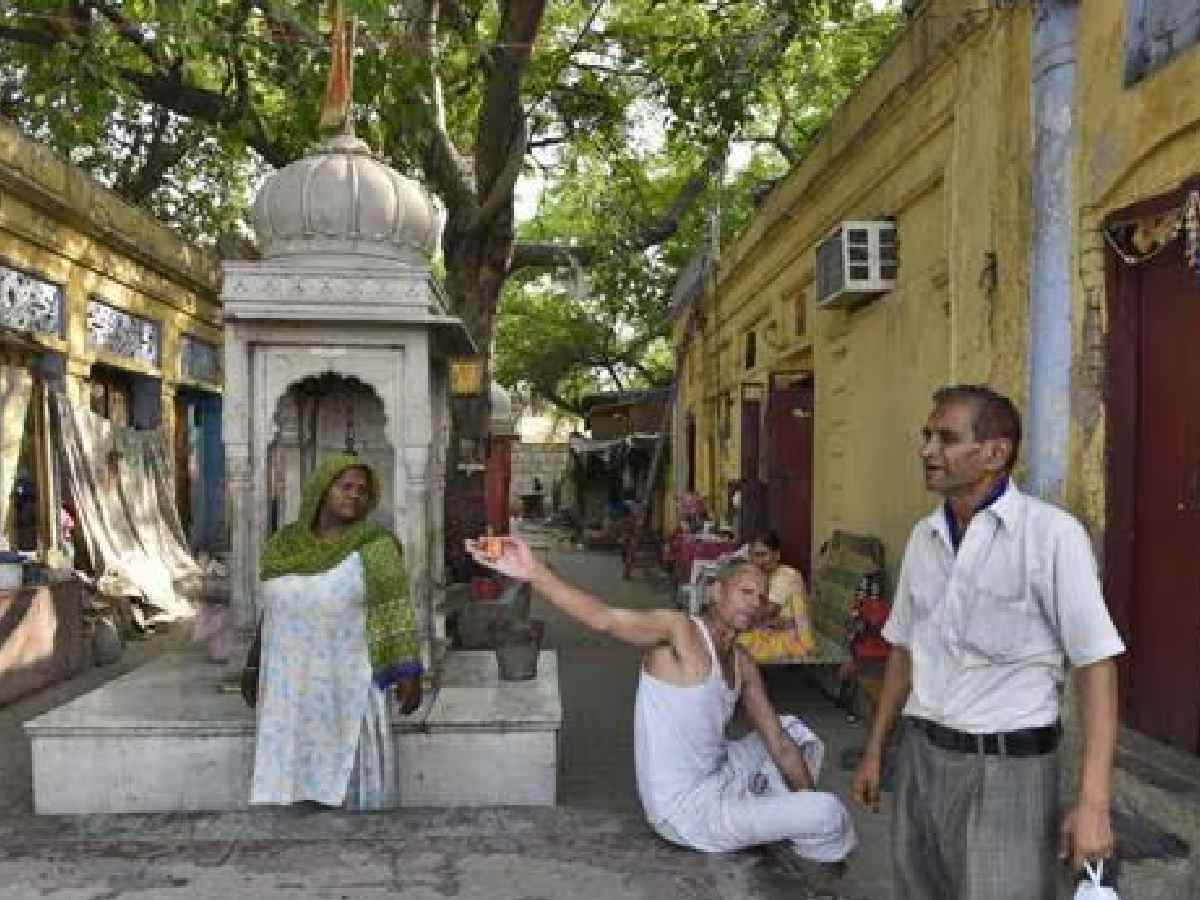
Residents argue that such evictions will wipe out religious traditions that have been practised for generations. The ghats, they say, are not just places of residence but sacred spaces where rituals and ceremonies are performed.
They allege that the government is failing to address the actual causes of Yamuna’s pollution—primarily the illegal factories operating unchecked in various parts of the city. Instead, authorities are targeting communities that have preserved the religious and cultural significance of the river.
Notably, the national capital is home to 31 ghats along the Yamuna, comprising nearly 150 houses. These are inhabited by over 650 people. The residents claim that authorities plan to carry out a large-scale demolition at these ghats within the next six months, dislocating hundreds of people to make way for a park on the floodplain.
Also read: Illegal construction surges on Yamuna floodplains despite court orders
‘Authorities hiding nexus with illegal polluters’
Speaking to Patriot, Gopal Jha, General Secretary of the Resident Welfare Association, Yamuna Bazar, said, “The authorities will conduct a massive demolition drive at all the 31 sacred ghats of the Yamuna on the pretext that the residents are polluting the river.”
Jha alleged that the move is aimed at diverting attention from the real culprits. “The authorities, in order to hide their nexus with the actual illegal polluting factories running in the national capital, are conducting these demolition drives, resulting in the dislocation of hundreds of people,” he said.
‘Even the British didn’t remove us’
Residents say they have lived at the ghats since the British era. Jha asserted, “They have been living here for more than 100 years now. The DDA and courts are saying that we are residing here illegally, but we are here even before the inception of the development authority, so how did our houses become illegal?”
He added, “The authorities claim they are removing us because we are the reason behind Yamuna’s surging pollution. But the truth is that the major drains being directly dumped into the river, and the illegal factories operating under the nose of the authorities, are the real reasons behind the skyrocketing pollution levels.”
Documents issued by the state, now used against residents
Residents have also questioned how they could be labelled illegal when they possess valid government-issued documents.
“If we are illegal settlers, then why did the government issue us Aadhaar cards, ration cards, and electricity meters? These are documents that validate our identity and existence as Indian citizens. You can’t call us illegal when the system itself has recognised us for decades. We pay our bills, vote in elections, and live peacefully—now suddenly we are being labelled as encroachers. It feels like we are being erased not just from land, but from our own identity,” said Ramnath Sharma, 83, a resident of Ghat 23.
“We’re being told today that we are encroachers on the Yamuna floodplains—but we’ve lived here for generations, legally or not, with full participation in society. Our houses are connected to electricity lines sanctioned by the authorities, we receive subsidised food from government ration shops, and every family here holds valid Aadhaar cards. These aren’t fake—they were issued through official processes. So how is it that one hand of the government recognises us while the other is trying to demolish our homes and erase our history?” Sharma said.
Another resident of Ghat 23, Chandan Kumar, echoed the sentiment. “It’s deeply hurtful to hear the word ‘illegal’ attached to our homes and our families. For years, we’ve been part of every government survey, every election, every public health campaign. Aadhaar, ration cards, electricity connections—these were not granted in secrecy; they were given with full awareness of where and how we live. If the system truly believed we were illegally occupying this land, why were we ever made part of it in the first place? The government can’t have it both ways—they can’t call us citizens when it suits them and illegal when they want to evict us.”
‘We worship the Yamuna, we don’t pollute it’
Residents claim that the portrayal of their community as polluters is deeply misleading and unfair. They argue that, as devotees of the river, they are the ones maintaining its cleanliness and spiritual significance.
Sudheer Sharma, 65, a resident of Ghat 31, said, “We dump our waste into the Municipal Corporation of Delhi waste collector trucks every day in the morning. Most of the men use the public toilets, while women use the toilets at home itself. The residents of the area worship the holy river and keep the culture and tradition alive by performing the rituals.”
“It’s very sad that the authorities term us as the individuals polluting the Yamuna river,” Sharma concluded.
Also Read: Plan to clean Yamuna by diverting Ganga water draws experts’ flak
Wider demolition campaign already underway
Meanwhile, the DDA has carried out multiple demolition drives across various parts of the city. These include locations such as Majnu Ka Tila, Bhoomiheen Camp, Old Usmanpur village, Ashok Vihar, Wazirpur, Madrasi Camp, and Taimoor Nagar Camp.
With the floodplain demolitions looming, the future remains uncertain for hundreds of residents whose lives and livelihoods are deeply tied to the ghats of the Yamuna.