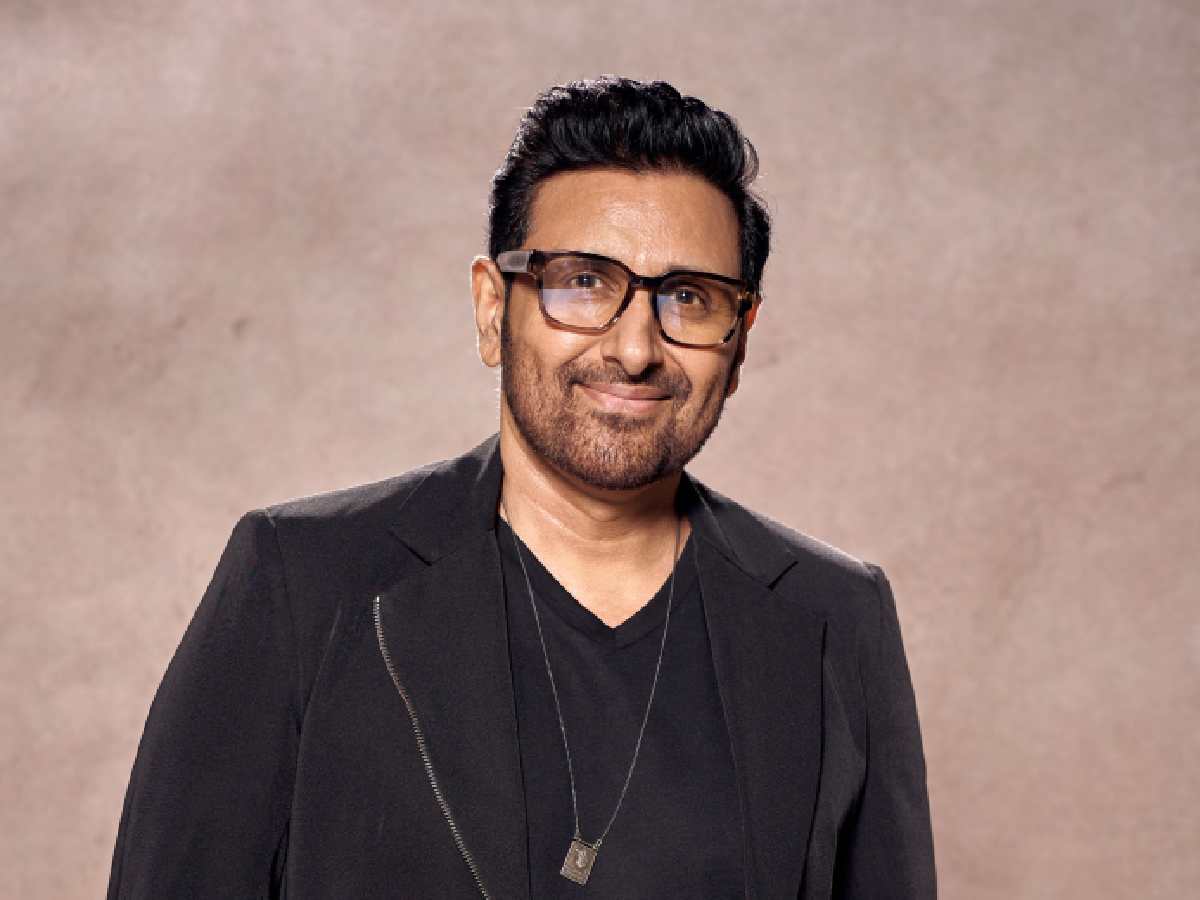
Actor, director, sports entrepreneur, husband and father — Parvin Dabas has spent much of his life moving between identities. Whether portraying memorable characters in films such as Monsoon Wedding, My Name Is Khan and Khosla Ka Ghosla, directing an award-winning film, or helping build the Pro Panja League into India’s premier arm-wrestling competition, he has approached each role with the same philosophy: work hard before you dream big.
“You have to first deserve and then desire,” Dabas says. “You have to first work very hard to be deserving of anything. Then you should desire.”
It is a belief forged over decades of navigating the uncertainties of cinema and, more recently, the challenges of establishing a new sporting ecosystem in India.
A Delhi upbringing
Born into a family originally from Kanjhawala in Outer Delhi, Dabas spent part of his childhood in Mississauga, Canada, before returning to the CKUapital during his teenage years. While both places shaped him, he believes Delhi played the defining role.
“From about three to 13, I was in Mississauga, Canada. From 13 to 20, I was in Delhi,” he recalls.
He studied at Modern School, Vasant Vihar, and later at Hansraj College, Delhi University. At one stage, acting was not the career he had envisioned.
“I was going to give my IAS exams,” he says. “But I was doing acting in school and then college. It was in the final year of college that I decided this is what I wanted to try and make a career.”
Delhi, he says, taught him resilience and adaptability.
“Everybody knows Delhi. I think it can prepare you for the world,” he says. “If you’ve grown up in Delhi, then you can become very street smart as well.”
That confidence eventually took him to New York to study acting before he made his way into the film industry.
The film that changed everything
Among the many projects in his career, Mira Nair’s Monsoon Wedding remains one of the most significant. The acclaimed ensemble drama not only brought him widespread recognition but also introduced him to a style of filmmaking that left a lasting impression.
The experience of working with Nair and a distinguished cast remains vivid even today.
“Meera Nair is a very open director, open to listening,” he says. “The cast was amazing. We did two weeks of rehearsals only. As an actor, it was a dream to work in an ensemble cast like that.”
Sharing screen space with seasoned performers became an education in itself.
“With the likes of Naseeruddin Shah, Lillete Dubey and all the others, it was a great mix of experience and youth,” he says.
What Dabas remembers most, however, is the warmth that surrounded the production. “Her mother used to make food for everybody and bring it,” he recalls. “It was like a family atmosphere.”
Lessons from Shah Rukh Khan
Another memorable chapter came with My Name Is Khan, where Dabas worked alongside Shah Rukh Khan.
Their connection stretched back much further than the film set.
“Shah Rukh Khan bhai was my senior at Hansraj College,” Dabas says.
Years later, working together professionally gave him a close view of the superstar’s approach to acting.
“He is so generous as an actor,” Dabas says. “He is very giving and always sharing. He is not trying to hog the scene or the limelight. He wants everybody to do well.”
The experience offered an important lesson.
Also Read: Preeti Jhangiani on cinema, comeback, and carving her own path
“The main thing I learnt is that you can be a big star and still share the space,” he says. “He is so secure with himself, his talent and who he is.”
Khosla Ka Ghosla still resonates
If one film continues to follow Dabas wherever he goes, it is Khosla Ka Ghosla.
Dabas believes the film’s enduring appeal lies in its honesty.
“The honesty of Khosla Ka Ghosla still resonates, as well as the underdog story,” he says. “The simple man fighting against the system is something that still goes on.”
With discussions around a sequel continuing, Dabas remains touched by the enthusiasm.
“It’s amazing to have been part of a cult film like that,” he says. “People are still waiting for it and still get excited about the sequel.”
Behind the camera
While acting remains his primary passion, directing offered Dabas a new perspective on filmmaking. His directorial debut, Sahi Dhandhe Galat Band, earned international recognition, including awards at film festivals in Mexico and Houston.
Yet the experience also revealed how demanding the role of a director can be.
“Acting and filmmaking are two very different things,” he says. “When you’re acting, you can do your role and come back. But when you’re directing, your whole life for that two- or three-year period revolves around that film.”
The experience reinforced his respect for the craft.
“If you want to direct a film, you cannot do it half-heartedly,” he says. “You have to understand every shot and be very planned before you come on set.”
The success of the film left him eager to return to the director’s chair.
“I really look forward to my second film as a director,” he says.
A new sporting ambition
In recent years, Dabas has become equally passionate about a different arena — arm wrestling.
As co-founder of the Pro Panja League, he has helped transform the sport’s profile in India.
“I would not call it a niche sport anymore,” he says. “It’s a really growing sport.”
The recent national arm-wrestling and para-arm-wrestling championships in Gandhinagar convinced him that the sport’s future is bright.
“There were around 1,700 to 1,800 athletes,” he says. “The atmosphere was electric.”
For Dabas, the appeal lies not just in competition but also in its social impact. He believes India can soon emerge as a global powerhouse.
Success, setbacks and perspective
Over the course of his career, Dabas has witnessed critical acclaim, commercial success and projects that failed to meet expectations.
Yet he refuses to see setbacks as failures.
The key, he believes, is maintaining perspective.
“You should never be too excited with your success or let something that has not done as well as you thought bring you down,” he says. “There are a lot of factors that determine a film’s success.”
A serious accident in 2024 reinforced that outlook.
The incident forced him to pause and reassess what truly mattered.
Today, he measures success differently.
“You want to achieve a lot,” he says, “but you also want to be the best actor, best husband and best father that you can be.”
Family first
Away from film sets and sporting events, Dabas describes himself as a hands-on father to his two sons with actor Preeti Jhangiani.
Balancing multiple careers with family life can be challenging, but he makes a conscious effort to stay involved.
“I keep having a lot of meetings with my kids,” he says with a laugh. “Teaching them about life, about work, about how to handle things.”
Whenever possible, the family travels together. Recently, they accompanied him to the national championships in Gandhinagar, and another trip to France is already on the horizon.
“We both travel a lot,” he says of himself and Jhangiani. “But we try to balance it as much as possible.”
For someone who has spent decades moving between cinema, directing, entrepreneurship and family responsibilities, balance remains an ongoing pursuit.
Yet the principle guiding him has never changed.
“Work very, very hard towards your goals,” he says. “Put yourself in a place where you get lucky when opportunity knocks. And the luck is only because you have worked hard for it.”
It is a philosophy that connects the many chapters of Parvin Dabas’ life — from a Delhi student preparing for civil service examinations to an actor, filmmaker and sports entrepreneur. For him, ambition has never been enough on its own. The work must always come first.