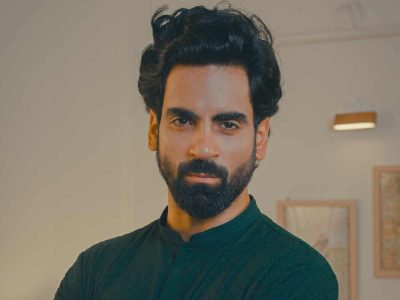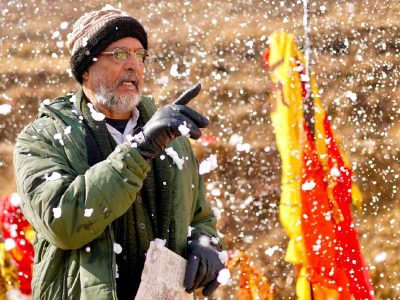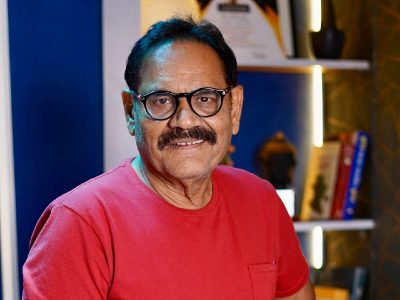
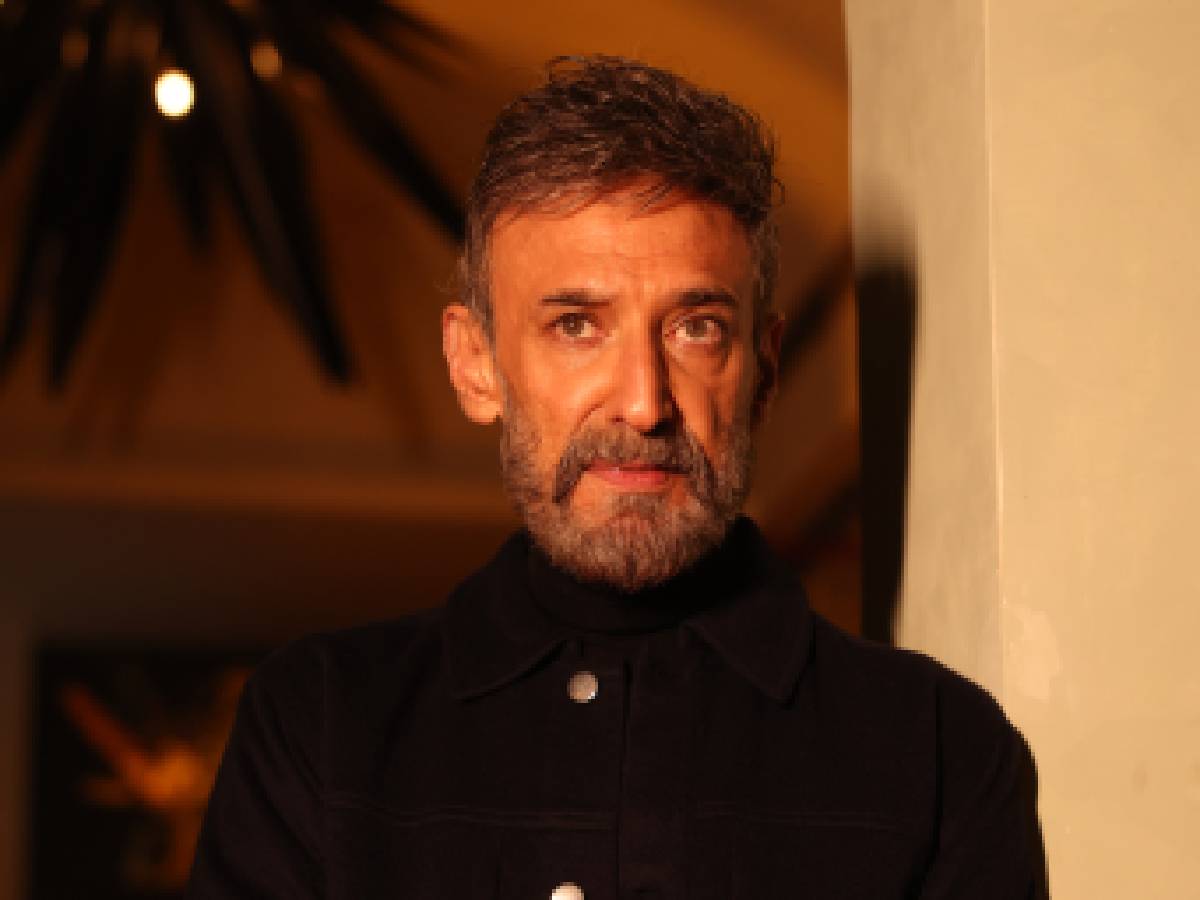
For Rahul Dev, cinema has never been about glamour. It has been about survival.
More than two decades into an industry that forgets quickly and forgives rarely, the actor speaks with the stillness of someone who has seen both applause and absence, success and silence. His career, marked by powerful antagonistic roles and long pauses in between, has been less about momentum and more about endurance.
“I don’t believe in the phrase ‘never too late’,” Dev tells Patriot during an extended conversation. “You have to begin again. That’s the only option.”
It is a philosophy shaped by loss, reinvention and a quiet refusal to quit.
A chance encounter, a different ambition
Dev’s entry into fashion and cinema was never planned. Trained as an engineer and briefly employed with Tata, he was spotted by designer Rohit Khosla at a nightclub — an encounter that would change the course of his life.
What struck him most about the world he entered, however, was not its glamour but its discipline.
Speaking about Abhishek Shah, founder of the fashion brand RIZVOL, whom he collaborated with, Dev recalls being deeply moved by the man’s work ethic. “There’s a guy in New York who works a completely different job during the day,” he says. “And when India wakes up, he starts working on his brand. Different time zones, same dedication.”
The story stayed with him. “He once told me he took a loan at 13.5% interest for his education and paid it off within a year. People say things are difficult. They’re not. It’s the human being who makes them difficult.”
That quiet grit resonated deeply with Dev. “If someone puts their heart into something, you want to shake hands with that person,” he says. “You feel connected.”
The instinct to stay grounded
Despite his association with fashion and film, Dev has always resisted surface-level glamour. “I don’t like loud branding,” he says. “I like things that are understated. The texture, the fabric, the story behind it — that matters more than logos.”
He speaks with surprising sensitivity about craftsmanship, about Kashmiri wool, lining and the dignity of well-made clothing. “People only see the outside,” he says. “They forget what’s inside.”
It is a philosophy that mirrors his approach to acting.
Roots in discipline
Born and raised in New Delhi, Dev grew up in a household shaped by discipline and structure. His mother was a school principal; his father, a decorated police officer who received a gallantry award from the President of India.
“My mother believed in education above everything,” he says. “She was strict — like the parents in 3 Idiots. Study first, everything else later.”
His father’s presence left an even deeper imprint. “Seeing him on Doordarshan during the Republic Day parade — that stays with you. It teaches you what service and responsibility really mean.”
Acting, he insists, was never part of the plan. “Modelling had nothing to do with my upbringing. It was another world.”
Yet the world found him.
From appearance to performance
Dev’s modelling career took off rapidly, leading to campaigns and high-profile shoots with photographers like Prabuddha Dasgupta. But acting, he soon realised, demanded something else entirely.
“The challenge was crossing the barrier between looking good and becoming the character,” he says. “Anyone can pose. But how does a one-legged man walk? How does a deaf person communicate? That takes work.”
His film debut in Champion (2000) established him as a formidable antagonist. But success came with limitations.
“At that time, villains were written in black and white,” he says. “Heroes were pure. Villains were evil. Real life isn’t like that.”
Coming from a family rooted in discipline and service, playing criminals was not easy. “I had to convince myself first,” he admits. “But I kept telling myself — if I can make the audience believe in this character, I’ve done my job.”
Loss, responsibility and survival
In 2009, Dev’s life changed irrevocably. He lost his wife to cancer. His son was just ten years old.
“I couldn’t be a full-time parent,” he says quietly. “I was always travelling, shooting in different cities. Films don’t happen in Mumbai — they happen everywhere else.”
For nearly four-and-a-half years, he stepped away from work.
“Nobody waits in this industry,” he says. “If even Amitabh Bachchan had to struggle at one point, who are we?”
The comeback was slow. Reality television. Supporting roles. Web series. Then films again.
“You don’t return in one leap,” he says. “You build it again, brick by brick.”
Learning never stops
One of his most demanding roles involved playing a military officer inside a real tank.
“Once the hatch closes, it’s pitch dark,” he recalls. “You can’t see anything except a slit. That machine can destroy another machine. Imagine the pressure soldiers operate under every day.”
The experience changed him. “Cinema can never truly capture what they go through,” he says. “We take their lives for granted.”
The art of beginning again
Now in his mid-fifties, Dev speaks with clarity rather than nostalgia.
“Life doesn’t stop for anyone,” he says. “Loss happens. Work stops. But you continue.”
He rejects the comfort of clichés. “The phrase ‘never too late’ is misleading. You don’t wait. You restart.”
Looking back, he sees his journey not as extraordinary, but instructive. “I’ve played villains, soldiers, fathers. I’ve failed. I’ve returned.”
And that, he believes, is the real craft.
“Survival is the art,” he says. “Everything else is secondary.”
A curious coincidence
In Champion (2000), a masked man is killed, briefly convincing the audience that Dev’s character has died. Two years later, in Awara Paagal Deewana (2002), his character Vikrant again survives after an impostor dies in his place.
When this coincidence was pointed out to him during a conversation with Patriot, Dev laughed. “I never realised that both films had that similarity.”
Speaking of Awara Paagal Deewana, he added, “I always tell Vikram Bhatt — ‘tu comedy bana.’ He has a straight-faced sense of humour.”
Dev grew reflective while speaking about Bhatt. “He’s very close to my heart. He’s going through a difficult phase right now. I don’t know the details, but I hope things work out for him.”
Films that stayed with him
Dev also spoke about 1920: Horrors of the Heart, directed by Krishna Bhatt. “I thought the film wouldn’t work at all,” he admitted. “But it did. That song ‘Lori’ became very popular. I was surprised.”
He recalled watching Krishna Bhatt grow up on film sets. “I used to see her coming from piano lessons during Footpath. When she directed me, I felt proud.”
He also revealed that Emraan Hashmi’s dialogues in Footpath were dubbed by Vikram Bhatt — a little-known detail from Bollywood’s early 2000s.
The film that never released
Few know that Dev was part of Mukul Anand’s ambitious project Dus, starring Salman Khan and Sanjay Dutt — a film that never saw completion after the director’s untimely death.
“I was playing a character called Mast Gul,” he says. “The shoot was massive. We shot in Utah. A replica of Kashmir was built there.”
He recalls being trained by Hollywood action director Don Shanks and learning knife-throwing for the role. “It was a 40-day schedule. Everything was grand.”
He was paid Rs 11 lakh for the film — a huge amount at the time. “I had just quit modelling. I had bought a flat. I never struggled for a roof.”
When Mukul Anand passed away, the film collapsed. “Many names were suggested to complete it. Even David Dhawan,” he says, amused. “But that was a different kind of cinema altogether.”
Gratitude and perspective
Despite the ups and downs, Dev remains deeply grateful.
“I’ve worked with 31 National Award winners — Rajamouli, Santosh Sivan, Mukul Anand, Sriram Raghavan,” he says. “That’s my real fortune.”
He pauses before adding, “I wasn’t trained. I learned on the job. And I got paid to learn.”
For Rahul Dev, that, perhaps, is the truest definition of success.
Not stardom.
Not longevity.
But the courage to begin again — every single time.