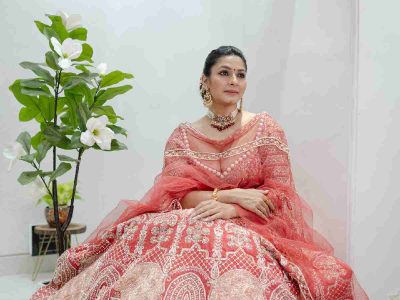
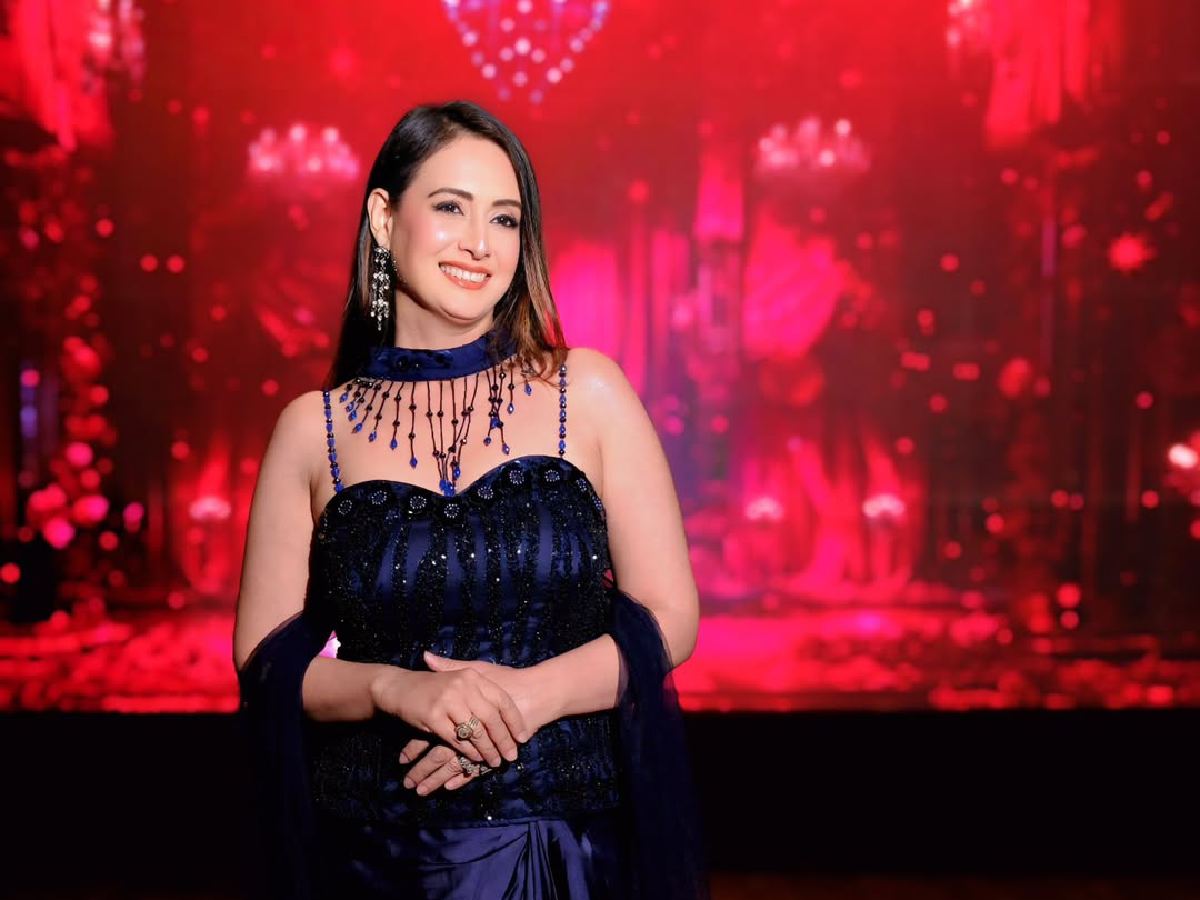
For audiences who grew up in the late 1990s and early 2000s, Preeti Jhangiani remains inseparable from the innocence of Yeh Hai Prem and the warmth of Mohabbatein. Over the years, she became a familiar face across Hindi, Telugu, Malayalam, Punjabi, and Rajasthani cinema, balancing mainstream commercial films with more layered performances.
Yet, for Jhangiani, the journey was never planned.
“Actually, my career path has always turned out differently from what I imagined, and always for the better!” she says. “I never even dreamt of becoming an actress, and suddenly I was working with some of the biggest names in Hindi, Telugu, and Tamil films. I never thought I would produce a film or create a sports league with my husband, or be president of an Indian sports federation. So I always say, ‘Never say never’.”
The Yeh Hai Prem phenomenon
Long before social media virality became common, Yeh Hai Prem had already created a cultural frenzy. The Rajshri Productions music video made Jhangiani a household name almost overnight.
“Yes, Yeh Hai Prem changed my life completely and unexpectedly because no one expected the video to become such a big hit,” she recalls. “Suddenly, I was a household name and couldn’t walk on the streets without being stopped.”
The success opened unexpected doors. “It opened a whole world of commercials and advertising, and I did more than 50 commercials and then eventually films,” she says. “That’s the video Aditya Chopra saw and cast me for Mohabbatein.”
Her breakthrough came at a time when music videos were redefining popular culture in India. Alongside actor Abbas and the now-iconic koala symbol associated with the album, Jhangiani became one of the most recognisable faces of the era.
The Mohabbatein chapter
If Yeh Hai Prem introduced her to audiences, Mohabbatein cemented her place in Hindi cinema. The 2000 film brought her together with some of the industry’s biggest names, Amitabh Bachchan, Shah Rukh Khan, and filmmaker Aditya Chopra.
Remembering the experience, Jhangiani speaks with admiration and affection.
“Amitabh ji, truly an icon. Humorous and so young at heart,” she says. “Shah Rukh Khan was charming and gracious. He used to play competitive GK games with Aditya Chopra every night during the shoot.”
Her gratitude towards the filmmaker remains unwavering. “Aditya Chopra, I owe my career to him. Very reserved but very brilliant and talented.”
She also reflects on the personalities of her co-stars beyond the camera. “Both Mr Bachchan and Mr Shah Rukh Khan are among the most charming people you will ever meet. Mr Bachchan has an incredible command of languages; just listening to him is a pleasure. Mr Khan is the most humble, friendly, and extremely intelligent, just like Mr Aditya Chopra, always thinking, never sitting still. There is so much to learn from both. Mr Bachchan, in particular, is tireless, never lazy, always raring to go.”
Across industries and languages
Unlike many actors who remain confined to one industry, Jhangiani built a career across multiple languages and film cultures. From Malayalam cinema with Mazhavillu to Telugu blockbusters such as Thammudu and Narasimha Naidu, she moved comfortably between industries.
Interestingly, she sees more similarities than differences.
“No difference really, but I did learn discipline and hard work from my South films as they were some of my early films,” she says.
Her Telugu films, particularly Thammudu opposite Pawan Kalyan and Narasimha Naidu alongside Nandamuri Balakrishna, remain especially popular among audiences.
Speaking about Kalyan, she remembers his intensity and dedication. “Never seen anyone work so hard and so sincerely at such a young age,” she says. “He even did all his stunts for the film himself. He was very particular about each and every aspect of the film.”
Balakrishna, too, left a strong impression on her. “Bala sir, I respected a lot and was in awe of him, and he used to tell a lot of fascinating stories about his father. Again, a tremendously hardworking actor.”
Learning comedy from Govinda
Though audiences often associate her with romantic and dramatic roles, Jhangiani also explored comedy through films such as Awara Paagal Deewana and Waah! Tera Kya Kehna.
But comedy, she admits, was never easy.
“Oh no, comedy is the hardest part of acting!” she laughs. “In Awara Paagal, my role was a serious one, but actual comic timing I learnt from Govinda in Waah! Tera Kya Kehna.”
The actor credits Govinda for helping her become more confident with comic performances. “He really encouraged me and actually made me do two comic sequences with him in one take!” she says. “But I’m still better at emotion than comedy!”
Balancing family and comeback
After marriage and motherhood, Jhangiani consciously stepped back before gradually returning to acting. But unlike the common perception that balancing family and career is difficult, she approaches it practically.
“It’s not difficult, but you have to prioritise what’s important for you and also learn to manage your time,” she says. “Once an actor, always an actor.”
She believes women naturally develop the ability to balance multiple responsibilities. “A woman is a multitasker always and I managed to find time to do what I love, that is acting, and also give time to both my kids and my home,” she says. “Millions of women around the world do that and I am no different!”
Her husband, actor Parvin Dabas, has been one of her strongest supporters through the years.
“Because we both are actors, we understand the demands of the profession,” she says. “Parvin really pushes, supports and encourages me in all my work, and I try to do the same.”
Recognition and rediscovery
One of the most critically acclaimed performances of her career came much later with the Rajasthani film Taawdo the Sunlight, for which she won the Best Actress award at the Rajasthan International Film Festival.
For Jhangiani, the recognition carried emotional significance.
“I always loved the script of Taawdo and knew it would be a role of a lifetime,” she says. “I worked very hard at it.”
The award, she says, validated years of effort and preparation. “Receiving the Best Actress award for it was really a validation of all the hard work and preparation I put into the role both physically and mentally. It really was a special moment for me.”
Yet another film remains personally close to her heart: Chand Ke Paar Chalo.
“A film that actually was a big hit and people love it and talk about it wherever I go, but I feel the industry did not really recognise it,” she says. “It was also a very layered and difficult role.”
OTT and evolving storytelling
Even after more than two decades in cinema, Jhangiani remains excited about newer forms of storytelling, especially on OTT platforms.
“I love thrillers and horrors. Also romantic dramas!” she says enthusiastically. “Definitely, the audiences will see me in an OTT show soon and also on the big screen for sure! Like I said, ‘Once an actor, always an actor!’”
Her recent projects, including Kafas and Udaipur Files, reflect her inclination towards stories with social depth and emotional intensity.
Speaking about Udaipur Files, she says, “It is based on a heinous crime, and to me, it reinforced that justice delayed is justice denied. It’s about how crime has no religion.”
Kafas, too, dealt with a difficult and uncomfortable subject. “Kafas, again, was a story that needed to be told and addressed a bold subject, the abuse of boys and the fact that everything uncomfortable is brushed under the carpet and perpetrators are not being brought to justice.”
After nearly 26 years in the industry, Jhangiani believes the craft itself has evolved.
“Earlier, it was the lack of preparation, scripts and dialogues weren’t always given in advance,” she says. “Now the hardest part is immersing yourself completely in a role, really getting into the skin of a character.”
Despite all the unexpected turns her career has taken, one thing has remained unchanged: her love for performance.