Japanese Prime Minister Sanae Takaichi’s three-day visit to New Delhi from July 1 to 3 will be centred on high-level discussions with Prime Minister Narendra Modi and other senior Indian leaders on bilateral relations, trade, security, technology and international issues. But beyond the official engagements, the Capital is home to several people and places that reflect the long-standing cultural, spiritual and people-to-people ties between India and Japan.
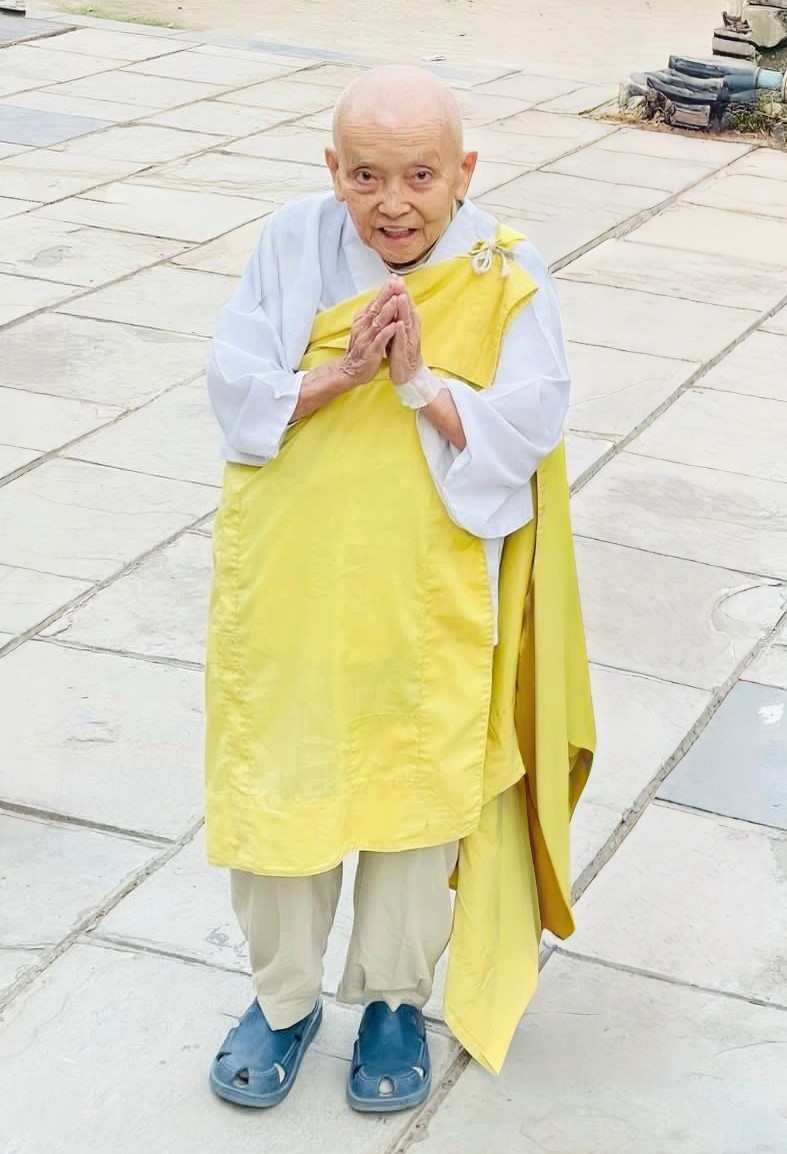
One person she may wish to meet, if time permits, is Katsu San, affectionately known as Katsu Bahen, a Gandhian of Japanese origin who has made India her home.
Katsu came to India in 1956 to gain a deeper understanding of Buddhism. Inspired by Gandhian ideals, she decided to settle in India. She now lives at the World Peace Stupa on Ring Road in Indraprastha Park.
Now 90, she attends the morning prayer at Rajghat and the evening interfaith prayer at Gandhi Smriti every day. She reads prayers from Buddhist scriptures and speaks fluent Hindi, which she learnt from Kaka Saheb Kalelkar.
Katsu travels across villages, towns and cities to spread the message of brotherhood, love and peace. Her presence adds a special dignity to the prayer meetings at Rajghat.
Under the Bodhi tree
Beyond individuals such as Katsu Bahen, several places in Delhi also reflect the shared Buddhist and cultural heritage of India and Japan.
One such place is Buddha Jayanti Park. Fumio Kishida, Takaichi’s predecessor, visited the park with Prime Minister Modi during his 2023 visit to India.
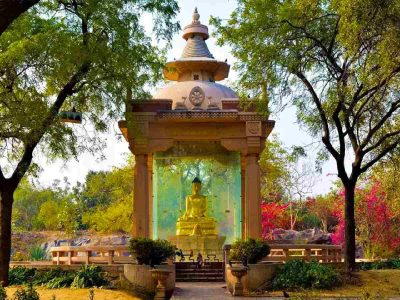
Known for its Bodhi tree, the park was developed in 1956–57 to mark 2,500 years of Lord Buddha’s Mahaparinirvana. According to Wangmo Norbu, an active member of Delhi’s Buddhist community, “there is a Bodhi tree here that is connected to the original Bodhi tree. Its branch was gifted by Sri Lankan Prime Minister Sirimavo Bandaranaike to Lal Bahadur Shastri in 1964. Shastri planted the tree here on October 25, 1964.”
The tree is now a popular attraction for diplomats and visitors from Buddhist countries, and the park remains a place of quiet reflection.
A forgotten memorial
Delhi also has sites associated with visits by members of Japan’s imperial family.
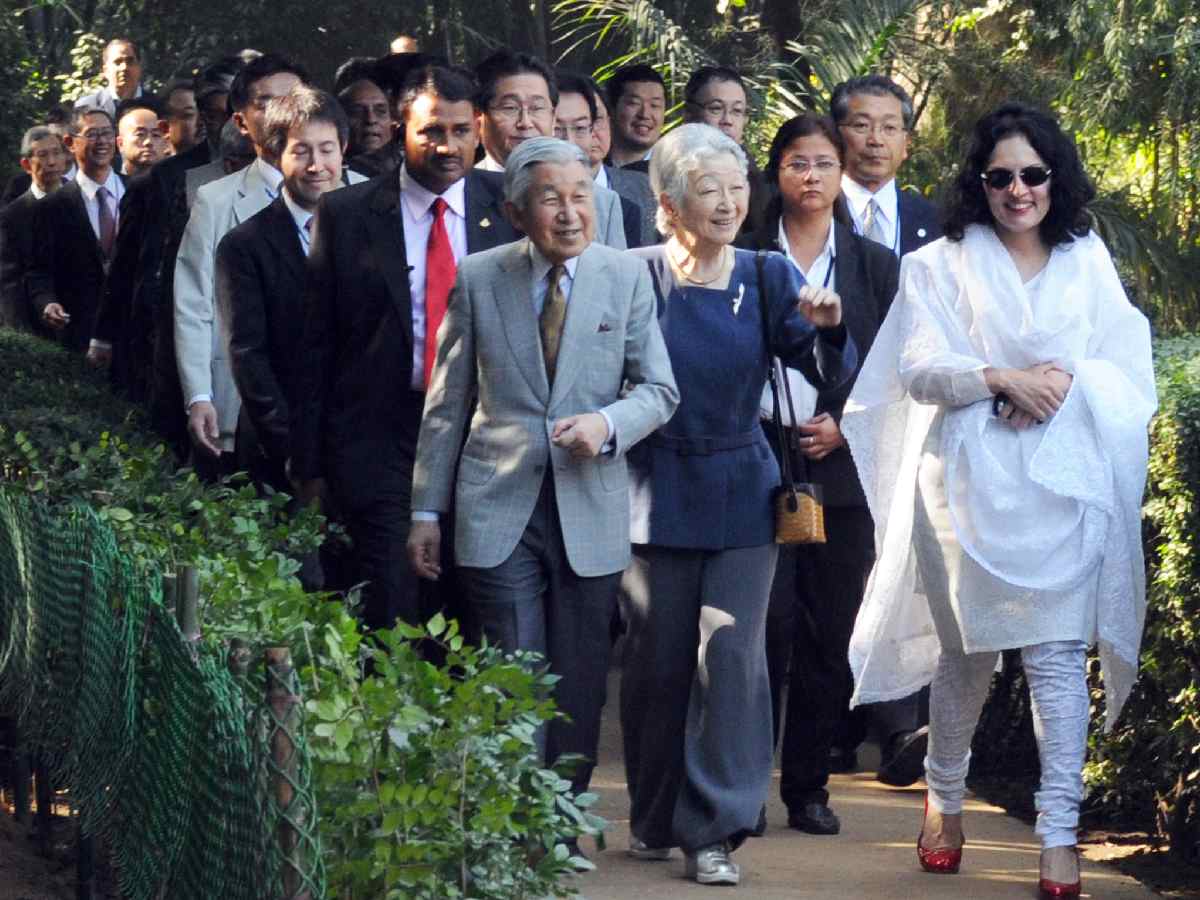
Former Emperor Akihito and Empress Michiko visited Lodhi Garden during their 2013 trip to India. The royal couple spent time near the large dome and showed interest in the park’s trees and plants. They were particularly interested in the Ashoka and Peepal trees, as the Ashoka tree holds special significance in Buddhism.
Another site linked to Japan’s history in Delhi is the York Christian Cemetery on Prithviraj Road near India Gate. It contains a memorial bearing the inscription: “In memory of those who lost their lives in the plane crash.” The memorial commemorates the 82 people from Japan, the United States, Brazil and Britain who were killed when an aircraft crashed at Jaitpur in South Delhi on June 14, 1972. The memorial appears to receive few visitors today. A floral tribute here would honour those who lost their lives. No senior Japanese dignitary is known to have visited the memorial.
Building a home in India
Beyond these historical landmarks, Delhi-NCR is also home to a thriving Japanese community.
The Japanese community in Delhi and Gurugram has grown steadily over the years. Gurugram is often described as a ‘home away from home’ for Japanese expatriates. Many Japanese professionals live there because of companies such as Suzuki, Toyota, Honda and Toshiba. Japanese restaurants, community spaces and residential clusters are now common.
Projects such as AJU Japan Town provide facilities tailored to Japanese expatriates. It is India’s first residential township designed specifically for Japanese residents. According to Gurugram-based writer Vinod Bahl, many Japanese prefer to live according to their cultural preferences, which has encouraged developers to build communities that cater to their needs.
Keeping traditions alive
The community has also established institutions that help preserve its cultural identity.
One such institution is the Japanese School in Vasant Kunj, established on September 1, 1964. It provides education based on the Japanese curriculum for children of Japanese families in Delhi-NCR. Ikebana demonstrations, tea ceremonies and other cultural events are regularly held in Gurugram, allowing Japanese expatriates to preserve their traditions while engaging with local Indian culture.
Also Read: Lodhi Garden: 90 years of shared city space
Prime Minister Takaichi’s visit is expected to strengthen bilateral ties between India and Japan. If she is able to visit places such as Buddha Jayanti Park and Lodhi Garden or meet Katsu Bahen, it would add a meaningful cultural dimension to her visit.
The Japanese community in Delhi and Gurugram is living proof of the enduring relationship between the two countries. It continues to serve as a strong cultural and human bridge between India and Japan.