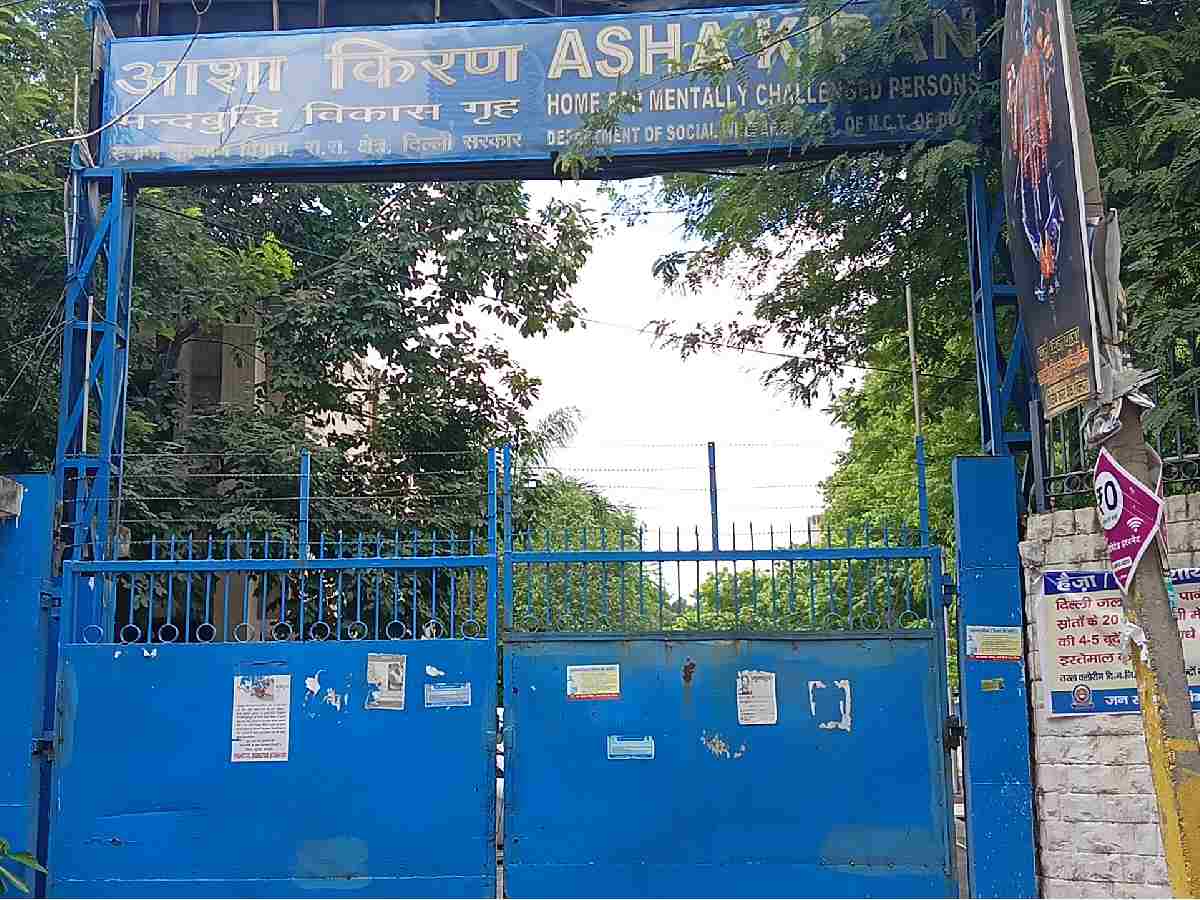
Two years after 14 residents died within a month at Asha Kiran, the Delhi Government has reduced occupancy and upgraded infrastructure at the Rohini shelter home. However, the facility remains overcrowded and understaffed, and continues to record four to five deaths a month.
Outside the complex, a dark-blue signboard installed nearly a year ago still looks new. Inside, the deaths recorded in July 2024 remain a troubling chapter in the institution’s history.
Asha Kiran, one of Delhi’s largest shelter homes for people with intellectual disabilities, recorded 14 deaths in July 2024. Between January and July that year, 28 residents died at the facility, putting the Delhi Government under scrutiny over conditions at the home.
Several of the deaths followed a similar pattern. The youngest resident to die that July was a 14-year-old whose preliminary report suggested that diarrhoea was the cause of death. Six of the 14 residents who died that month had reportedly suffered from diarrhoea in their final days.
Data from Asha Kiran’s medical care unit showed that 54 residents were taken to Dr Baba Saheb Ambedkar Hospital in Rohini that month, the highest number recorded in six months.
Several of those who died were also reported to have been severely malnourished and suffering from conditions such as tuberculosis, gastroenteritis and anaemia.
Occupancy reduced, but overcrowding persists
Officials said conditions at the facility had improved since 2024. Asha Kiran housed nearly 1,000 residents in July that year; its occupancy has now fallen to just over 700.
However, the facility continues to exceed its sanctioned capacity of 570. Officials said the shelter had limited control over admissions.
“The minors are mostly referred to us by the Child Welfare Committee (CWC), while the adults are mostly placed here through rescue missions undertaken by the department. However, a lot of them are now being referred to other homes as well,” an official said.
Conditions at Asha Kiran have remained under judicial monitoring since late 2024. The government has been directed to identify new premises, upgrade existing shelters in the city and submit regular compliance reports.
The Atal Asha Home in Narela, a Rs 41 crore facility with a capacity for 220 residents, was subsequently inaugurated in 2025.
Male residents of Asha Kiran were gradually relocated in smaller batches, with 30 shifted to Asha Deep and 34 to a Delhi Development Authority community centre.
Asha Deep, which was then a male-only shelter housing 120 residents, saw its occupancy rise to 150. All 150 men were subsequently moved to the Atal Asha Home, emptying Asha Deep and allowing it to be repurposed.
Following this, 50 women were shifted from Asha Kiran to Asha Jyoti and another 150 to Asha Deep, reducing occupancy in Asha Kiran’s women’s wing by nearly 40%.
At present, Asha Jyoti houses 170 residents, Asha Deep 150, Atal Asha 150 and the community centre 34. The transfers have reduced Asha Kiran’s total occupancy by nearly 27%, from 984 to 720.
Vijay Vihar Station House Officer Manohar Lal Meena said some of the residents shifted to the community centre could often be heard shouting.
“They keep shouting, and it is at least a gentle reminder that everything is all right,” he said.
Infrastructure upgraded
Officials said infrastructure and living conditions at Asha Kiran had also improved.
In March, around Rs 5.34 crore was sanctioned to the Public Works Department in the 2025–26 financial year to upgrade the institution’s buildings and facilities.
The work included painting and repairs in dormitories, tiling in toilets and bathrooms, steelwork and coil fencing around the gym and park areas, and horticultural improvements.
The institution was also provided with two new laundry machines, each with a capacity of 60 kg, while air-conditioning units were installed as part of the upgrade.
In May, the final tender for the supply of commercial heavy-duty ironing machines was approved
Two boreholes were constructed, chlorinated polyvinyl chloride (CPVC) water-supply pipelines were installed and two submersible pumps were set up. The underground water tank was renovated, while floodlights were installed along the boundary wall.
An official statement said security had also been strengthened through the installation of CCTV cameras in the dormitories.
Deaths continue despite improvements
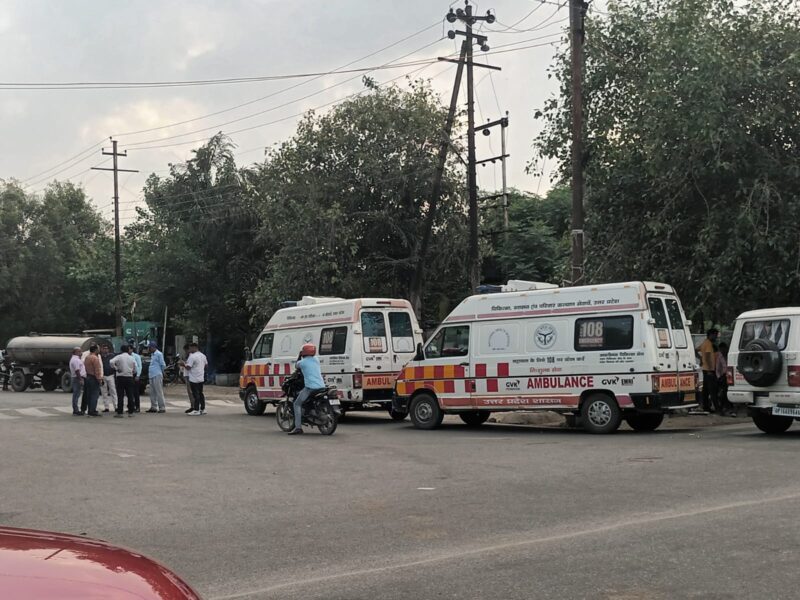
Despite these measures, the facility continues to record four to five deaths a month, according to the Vijay Vihar police station records accessed by Patriot.
“Deaths at the facility are common owing to the severity of the illnesses the inmates arrive with. Many of them not only have intellectual disabilities but also have other risk factors, such as diseases,” a senior police official said.
Every death at a facility under the Social Welfare Department must be registered at the local police station.
“The medico-legal records related to these deaths have to be maintained here and later forwarded to the department,” Meena said.
The medical care unit operates round the clock with only six doctors, 17 nurses and 50 auxiliary nurse midwives (ANMs). Official reports, however, show that posts for 10 doctors, 249 nurses and 62 ANMs were created at the facility following an order by the Lieutenant Governor in 2013.
Another directive was issued in 2025 to create 750 posts across centres for people with intellectual disabilities. However, many of the sanctioned positions remain vacant.
“We are in dire need of more people. We cannot wait around for inmates to keep dying,” said an orderly employed at the home on a contractual basis.
The staff shortage and overcrowding were also highlighted by the Comptroller and Auditor General of India (CAG) in a 2015 report.
The report found that the facility was severely overburdened, inadequately equipped to handle medical emergencies and chronically understaffed. It also noted that 148 residents had died at the shelter between 2009 and 2014.
The CAG criticised the department responsible for the facility for failing to address overcrowding at the complex. More than a decade later, Asha Kiran remains 150 residents above its sanctioned capacity, continues to record four to five deaths a month and has several staff positions lying vacant.