On July 12, two children drowned after reportedly falling into a rainwater-filled pit while playing in an agricultural field in Mukhmelpur village in Outer-North Delhi.
The Delhi Fire Service (DFS) received an emergency call at 5:55 pm reporting that two children were feared to have drowned in the pit. Two rescue teams were dispatched to the scene. Police later identified the children as 8-year-old Ayush and 10-year-old Nitin.
Police received another call about the incident near Hiranki Road at 6:08 pm. A preliminary investigation found that the boys had gone to play in the fields behind a house at around 4 pm when they accidentally fell into the pit. It had been excavated for drainage and to store excess rainwater from adjoining fields.
Firefighters and local residents pulled the children out and rushed them to Satyawadi Raja Harish Chandra Hospital in Narela, where doctors declared them dead on arrival.
“Preliminary inquiry revealed that the children had gone to play in the agricultural fields behind a house at around 4pm when they accidentally slipped into a water-filled pit that had been excavated to collect excess rainwater from adjoining fields. However, since there are no eye witnesses, it has not been fully ascertained whether they accidentally slipped or had deliberately entered to take a dip,” said an officer.
According to police, the pit had been dug for drainage and temporary storage of excess rainwater from nearby agricultural land. Investigators suspect that the excavation may not have been adequately secured, creating a hazard for children in the area. According to residents, there was no demarcation of the pit having been formed as well.
The deaths once again highlighted the dangers posed by water-filled pits during the monsoon and the challenges faced by the city’s rescue teams, from firefighters working in residential and agricultural areas to divers operating in the Yamuna.
Rescue operations often end in body recoveries
Residents often turn first to the DFS during drowning incidents, hoping firefighters will be able to rescue victims alive.
According to DFS data, firefighters had rescued 1,021 people by May 24 this year, including at least 20 in drowning incidents. However, such operations frequently ended in the recovery of bodies because of the dangers involved and delays in reporting or locating victims. More than 53 bodies had been recovered by that date.
Records from the Delhi Boat Club present a similar picture.
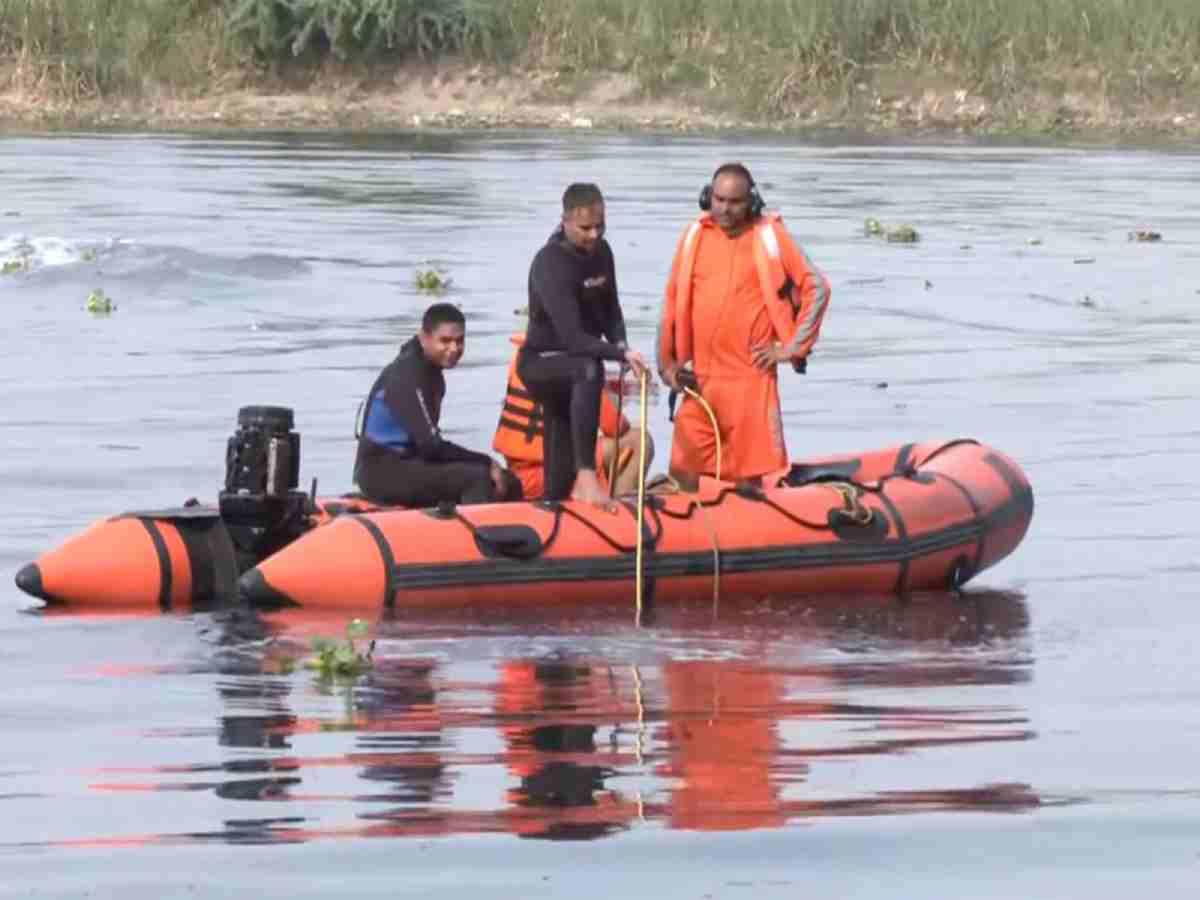
Delhi’s gota khors, or divers, are mostly men from riverside communities who serve as first responders to drowning incidents in the Yamuna, nearby drains and deep canals.
Working on contracts with the Delhi Boat Club in Civil Lines, they are frequently called into action when the Yamuna rises above the danger mark.
For years, they have carried out this critical work without a formal standard operating procedure, modern rescue equipment or regular training. The club currently employs only 18 contractual divers.
Government figures, maintained by the Boat Club itself, for 2025 show that the divers responded to more than 348 drowning calls. They recovered around 110 bodies, mostly of people who had died in accidents or by suicide, and saved between 70 and 80 lives. In 30 to 35 cases, they were unable to locate the missing persons or recover their bodies.
The monsoon months from July to September are their busiest period.
Self-trained divers with little equipment
Most of the divers are self-trained swimmers who grew up in riverside localities such as Jagatpur, Wazirabad and Burari. They generally enter the murky water wearing only shorts for “better mobility”.
Unlike professional teams such as the National Disaster Response Force (NDRF), they do not have standard equipment such as flow meters, life buoys and high-pressure breathing compressors. Despite this, they maintain that they are the only unit capable of undertaking high-risk, late-night operations and searching deep, water-filled pits.
Delhi Boat Club in-charge Harish Kumar said most of the divers had known one another for years and had spent their childhood swimming near the Yamuna Ghat.
“I have been swimming here since I was seven or eight years old. We would learn by picking coins from the riverbed for tourists,” Kumar said.
Swimming every day taught them to navigate underwater, even in the dark, he added. Recalling one operation, he said they had spent almost an hour underwater searching for a fisherman’s bag. “It was chilly, but we managed to recover his bag.”
Although attached to the Delhi Boat Club, the divers are also frequently called to neighbouring Noida, through which the Yamuna flows.
“We help with calls from Noida as it does not have a boat club,” said a diver who has been working with the team for a decade and requested anonymity.
He claimed that other rescue teams, despite having equipment, could not undertake late-night operations or searches in deep pits. The divers also receive calls from the Hindon area. “Our team is very efficient. We risk our lives almost every day,” he said.
Prank calls divert limited resources
The team’s work is also hampered by false alarms. According to Kumar, the club receives more than 100 prank calls every year, causing confusion and diverting resources from genuine emergencies.
The dangers faced by the divers came into focus on January 16, when the team was called after a software engineer fell into a water-filled pit in Noida’s Sector 150.
The tragic death of Yuvraj Mehta, a 27-year-old techie, had drowned in a water-filled pit at a flooded construction site, which had put Noida’s administration under severe scrutiny for negligence.
Mehta died after his car crashed through a compromised boundary wall and plunged into the flooded construction site right after midnight.
“At night, we only have torches that someone holds from a boat, with no mask or oxygen cylinder,” another diver said. “We literally operate with no equipment.”
He said divers had suffered cuts from stones and glass, while many had contracted infections after diving into polluted water. They also faced the risk of snake bites.
“I see private divers with helmets, masks, underwater control devices and other equipment,” he said.
Referring to the Noida incident, the diver said the team had received information about it and believed it could have saved the engineer. However, he said the risks were considerable and the divers received only Rs 20,000 a month without employment benefits.
Delhi Government officials said there was no permanent post for rescue divers within the administration. Instead, the authorities temporarily hire private divers when drowning incidents increase, particularly during the peak monsoon season.
Children particularly vulnerable
A senior DFS official said the chances of rescuing victims alive remained low because many incidents involved children falling into water-filled pits or adults falling into drains.
“A lot of these incidents concern children who flock towards pits filled with rainwater or waterlogged pits,” he said.
Children often assume such pits are safe for swimming because they cannot gauge their depth, putting them at risk of drowning, he added. “We try to reach the spot as fast as possible, but sometimes it’s too late.”
While the DFS responds to drowning incidents in pits and drains and the Delhi Boat Club handles emergencies in the Yamuna, both face similar difficulties. Rescuers often reach victims too late to save them.
These incidents are divided between the Delhi Boat Club, the DFS, and the National Disaster Response Force (NDRF) depending on the situation’s severity. According to DFS officials, they are called for fairly localised situations involving water pits, artificial holes, water plants, and drains, where the depth is comparatively manageable. On the other hand, the gota khors are called by the Delhi Police, specifically when diving into the Yamuna river is involved, owing to their familiarity with the water body.
On the other hand, the NDRF is called upon only when the situation demands more professional hands, specifically during search and rescue operations and flood-related incidents.