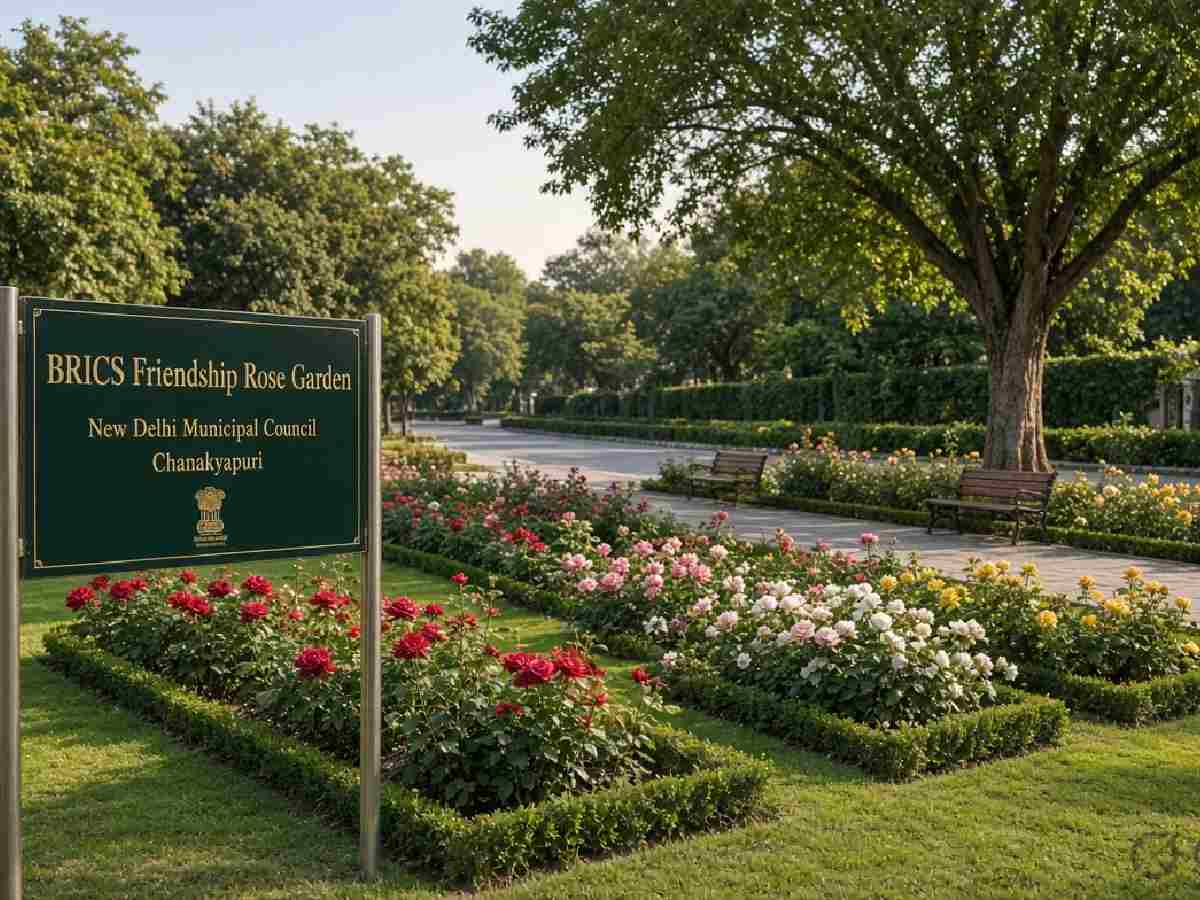
As Delhi prepares for the 18th BRICS Summit on September 12 and 13, one of the Capital’s clearest signs of the grouping sits not in a conference hall but among flowers. In Chanakyapuri, the BRICS Friendship Rose Garden is in bloom. Red, pink, white and yellow roses stand in neat beds. The air is sweet. Diplomats from nearby embassies walk the paths in the evening. City residents visit as well to sit on a bench and forget the traffic for a while.
The garden is a small, living sign that Brazil, Russia, India, China and South Africa and now a larger family of partners chose to work together. BRICS today has eleven members. The flowers do not explain that history. They only keep it in view. “The New Delhi Municipal Council is dressing the city for the summit: seasonal flowers, floral boards, fountains, lit roundabouts and road repairs. The rose garden itself is not being rebuilt. It does not need to be. Ten years after it opened, it is already serving as a symbol. It is open, green and easy to enter,” says Pritam Dhariwal, a retired NDMC employee.
Rose garden
NDMC developed the garden as part of the rose garden stretch along Satya Marg and Shanti Path. It covers about three acres. The then Union Minister M Venkaiah Naidu opened it on 10 August 2016. India was then preparing to host the BRICS summit in Goa. Officials wanted a lasting mark of the grouping in the Capital.
The garden was planted with 107 varieties of roses. Across the road stands the India-Africa Friendship Rose Garden. External Affairs Minister Sushma Swaraj inaugurated it on 25 October 2015, just before the third India-Africa Forum Summit. The two gardens sit side by side: one for Africa, one for BRICS. Together, they turn a stretch of the diplomatic enclave into a place of green welcome.
The scene is still lovely. Lawns, trees, and flower beds create a quiet world within a busy city. A grand pilkhan tree stands near one of the gates. Walking tracks run through the beds. In winter, the civic body holds rose shows in this belt, usually at the India-Africa garden next door. For a few minutes, the people who pass through are not officials of this country or that. They are simply walkers among flowers.
Delhi also keeps other signs of the original BRICS nations, scattered across parks and streets.
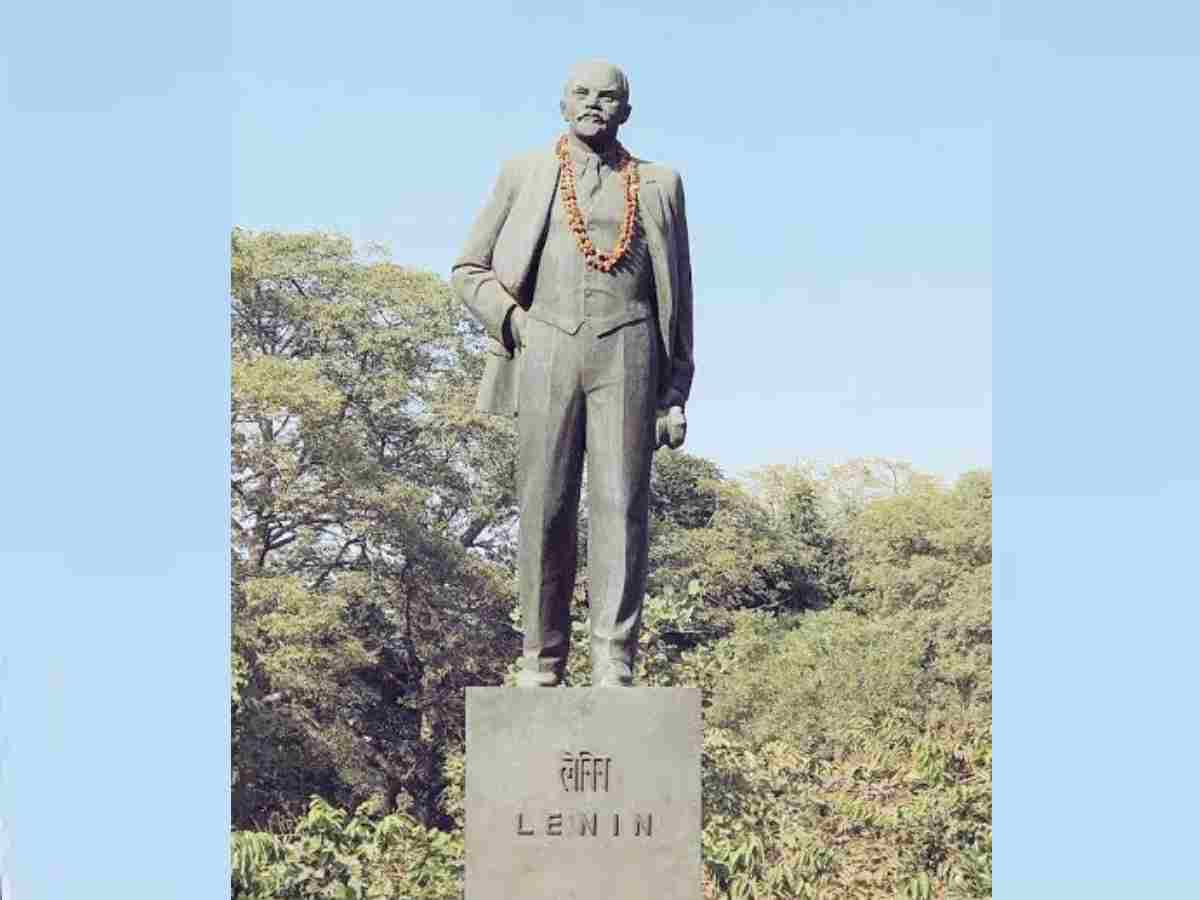
Russia is the easiest to find. In Nehru Park, a short walk from the rose gardens, stands a life-size statue of Vladimir Lenin. The park is large. It was laid out in the late 1960s for families living in the diplomatic area. The statue was unveiled on 1 November 1987, on the 70th anniversary of the October Revolution. Soviet Premier Nikolai Ryzhkov and Prime Minister Rajiv Gandhi were present. Lenin stands in a three-piece suit, looking slightly upward. Every year on 22 April, some Indian left parties still place flowers there on his birth anniversary. For most joggers and families, he is simply a familiar figure in the grass.
Tolstoy Marg
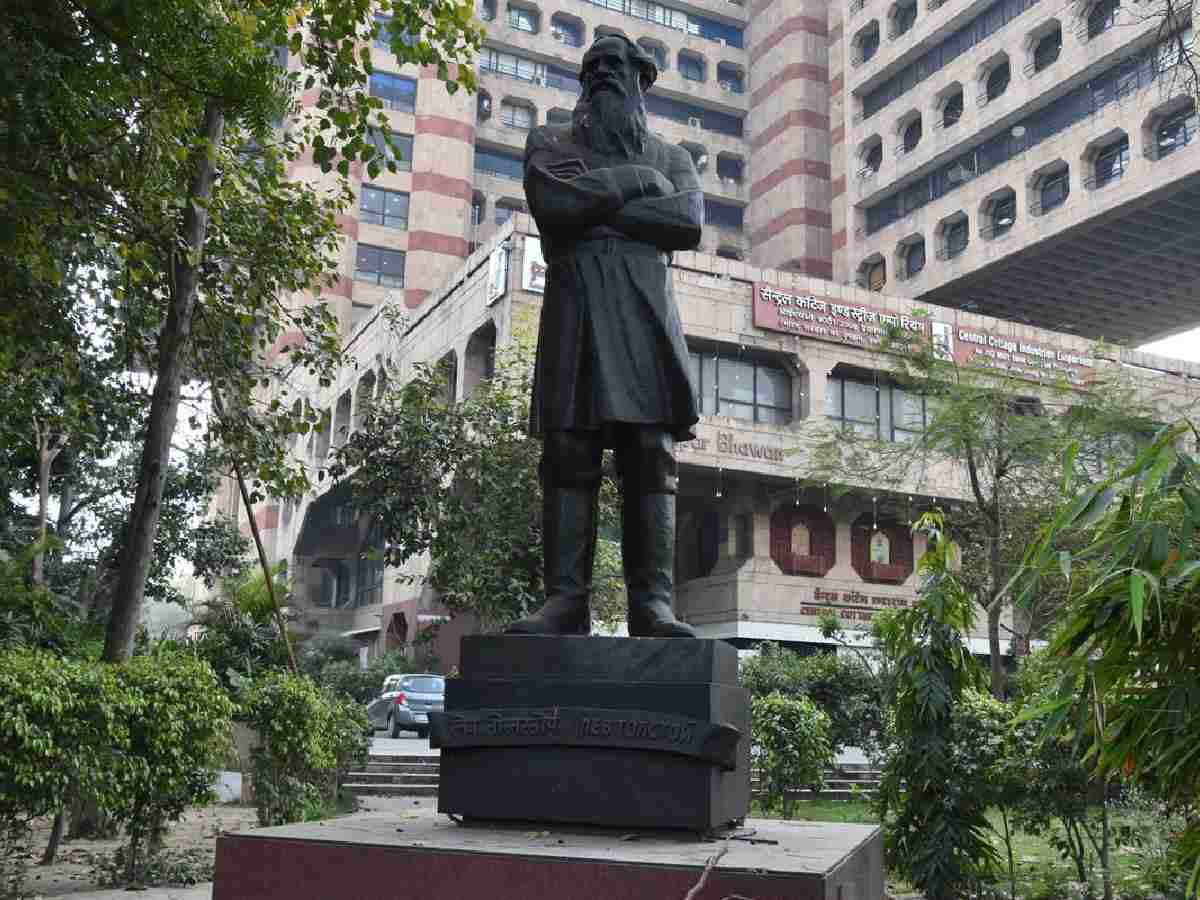
Not far from Connaught Place, Barakhamba Road meets Tolstoy Marg. The road is named after Leo Tolstoy, the Russian writer of War and Peace and Anna Karenina. A bronze statue of Tolstoy, made in the Soviet Union and installed in 1994, stands near Janpath. Russian Prime Minister Viktor Chernomyrdin unveiled it. The name is more than decoration. Tolstoy influenced Mahatma Gandhi, who even named a farm in South Africa after him. A Russian writer, an Indian freedom struggle, and a South African chapter of that struggle meet on one Delhi street.
Mandela’s Road and a Brazilian name on a stone. South Africa has its own road. Nelson Mandela Road runs through South Delhi, linking Vasant Vihar, Munirka and Vasant Kunj. It is named after Nelson Mandela, South Africa’s first Black president and the leader who helped end apartheid. Delhi also has Africa Avenue and other African names dating back to the Non-Aligned years. Mandela’s road is the one that most clearly belongs to a BRICS founder.
Brazil’s mark is quieter and sadder. On 14 June 1972, Japan Air Lines Flight 471 crashed near Jaitpur, short of Palam Airport, on land that later became part of the Vasant Kunj belt. Among those killed was Brazilian actress Leila Diniz. A small memorial stone in the cemetery on Prithviraj Road—sometimes called the Royal Cemetery and also known as the Christian Cemetery—remembers the dead of many nations whose ashes were placed there. It is not a grand monument. It is a reminder that Brazil, like the other BRICS countries, has a human story in this city, not only a diplomatic one.
China’s presence
China’s presence is official rather than named on a park board. The Embassy of the People’s Republic of China stands at 50-D, Shantipath, Chanakyapuri, almost next door to the rose gardens and Nehru Park. The same diplomatic quarter that grows BRICS roses also houses the missions of the member states. When summit guests drive down Shanti Path, they pass both the flowers planted in the group’s name and the gates of their own embassies.
Also Read: Lutyens’ bungalows: addresses that turned into legacy
“These places were not built for the 2026 summit. The rose garden is ten years old. The Lenin statue is almost forty. Tolstoy Marg and Mandela Road are older still. That is their strength. They show that ties among these countries are not only a meeting in a hall. They have already taken root in Delhi’s soil, stone and street names,” says Aroon Kumar, a noted author.
As NDMC repairs roads, plants extra flowers and lights roundabouts, the BRICS Friendship Rose Garden requires a little extra work. It is already what a good civic symbol should be. It is open. It is beautiful. It asks only that a visitor walk slowly and breathe.
A city that hosts the world should also remember how the world already lives inside it. In Chanakyapuri, the roses are in bloom. Nearby, Lenin still stands in the park named after Nehru. Tolstoy watches the traffic. Mandela’s name marks a South Delhi road. A quiet stone on Prithviraj Road remembers a Brazilian who never reached home. Together, they form a simple map of BRICS in Delhi, not on paper but in a garden.