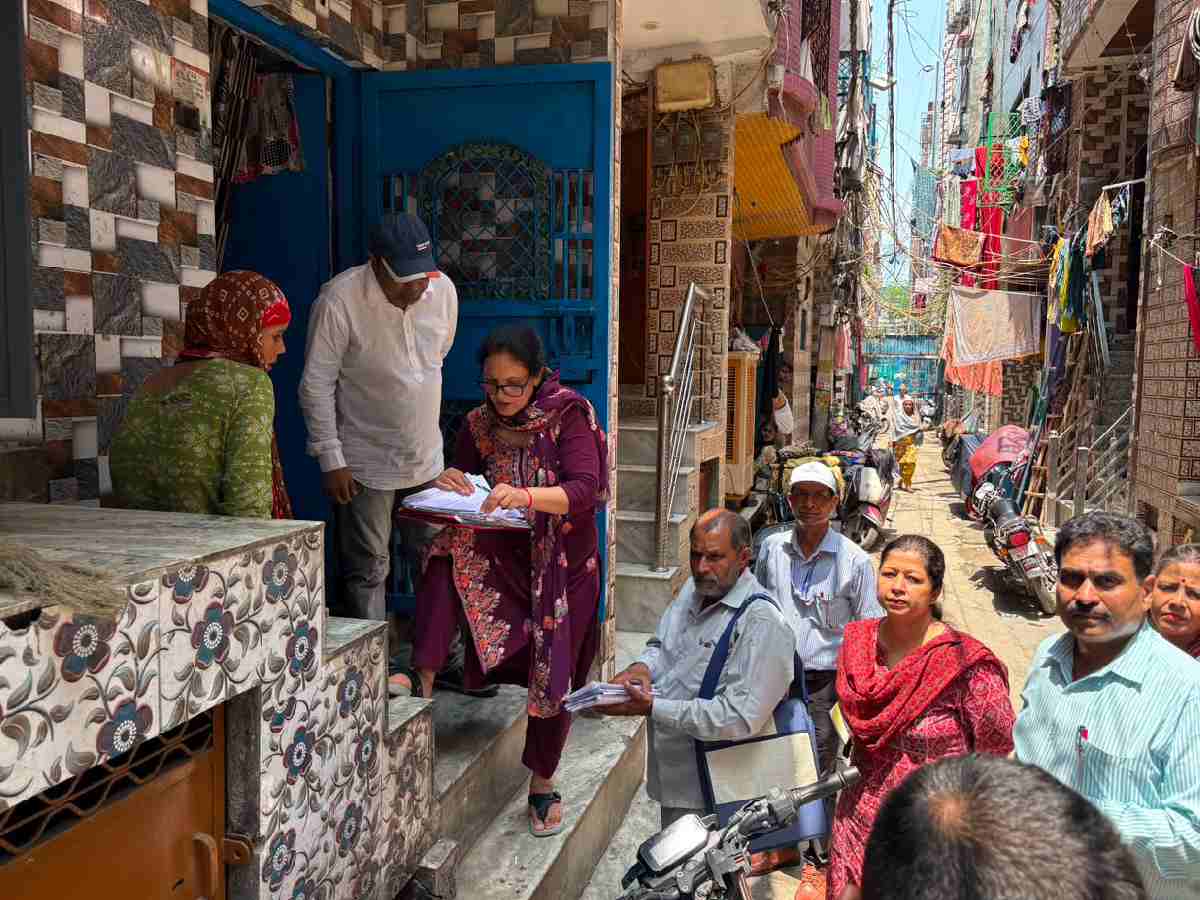
Thousands of teachers have been assigned as Booth Level Officers (BLOs) as part of the personnel required to conduct a Special Intensive Revision (SIR) in Delhi. Teachers, school principals and parents say the additional responsibility has come at a cost to the classroom.
Teachers say the election work demands considerable time and attention, leaving them to balance two sets of responsibilities. They say election-related work is the latest in a series of non-academic responsibilities, including census work, surveys, admission duties and other government campaigns, that compete with classroom responsibilities.
‘Teachers first’
They recognise the importance of election-related work but believe it should not come at the expense of teaching.
“We are teachers first,” a teacher at the Sarvodaya Senior Secondary School in Moti Bagh said, echoing a sentiment shared across several schools in the Capital.
The teacher said the work extends beyond filling out forms. It involves door-to-door verification, repeated visits when residents are unavailable, uploading documents, resolving discrepancies and meeting strict deadlines.
“We are accountable both as teachers and as BLOs,” the teacher said, adding that the dual responsibility often extends the workday well beyond school hours, leaving little time to prepare for the next day.
Another teacher, Mohit Kumar, from Moti Bagh, Shastri Nagar, says election-related work becomes especially challenging during the academic session.
“When children require revision, remedial classes and regular assessments, any additional administrative responsibility affects classroom planning.” Although lessons continue, preparation time and opportunities to give students individual attention are often reduced, he explains.
Schools adjust
School principals acknowledge the importance of election duty but say running schools becomes more difficult when several teachers are assigned as BLOs simultaneously. The perception that teachers have ample free time after school is a misconception, says retired school principal Dr Sukhbir Singh Yadav.
“Whether permanent or temporary, teachers spend a significant part of the day planning lessons, checking notebooks, preparing question papers and meeting parents.”
Dr Sukhbir says government school teachers have often been assigned election duty even during annual examinations. “Teachers have worked through every season, sometimes even during annual exams, and we worried about the impact.”
He says school representatives met Election Commission officials to raise the issue, but to no avail.
Dr Sukhbir says schools have limited flexibility once teachers are deployed. “If multiple teachers are occupied with election-related responsibilities, timetables have to be adjusted, classes redistributed and other teachers assigned additional periods.”
The ripple effect
Although schools try to ensure students do not lose instructional time and proper classes, principals admit the arrangement places extra pressure on the remaining staff. Another principal, PD Sharma, from Sarvodaya Bal Vidyalaya (SBV), Uttam Nagar, notes that government schools are already dealing with vacancies in several subjects.
“Any additional diversion of teachers, even temporarily, makes academic planning more difficult.”
According to school administrators, continuity is particularly important for students preparing for board examinations. Frequent interruptions, even minor ones, affect lesson schedules and revision plans.
Parents, too, feel the impact. They appreciate teachers’ role in election management but question whether the education system should rely so heavily on school staff for administrative work.
Seema (name changed), a parent of a Class V student, says teachers are often unavailable after school for academic discussions because they are occupied with official responsibilities. “We want accurate elections, but we also want uninterrupted education for our children.”
A longstanding practice
The deployment of teachers for election work is not new. Across India, government school teachers have long assisted election authorities because of their familiarity with local communities and administrative procedures.
Election officials argue that the credibility of electoral rolls depends on careful field verification. BLOs play an important role in identifying new voters, removing duplicate entries, verifying addresses and ensuring electoral records remain up to date.
Teachers acknowledge the importance of this work. However, many question whether the existing system adequately accounts for its impact on classrooms.
Some education experts have long argued that teachers should primarily remain engaged in academic work except during the actual polling process or in exceptional circumstances.
Education experts say learning recovery following the COVID-19 pandemic remains incomplete for many students. At a time when government schools continue to focus on foundational literacy, numeracy and reducing learning gaps, repeated administrative assignments risk slowing those efforts, they argue.