To be able to use water in Delhi now comes at a cost to health. Across the national capital, water supply has been intensely contaminated for the past decade. A functional audit of the Delhi Jal Board (DJB) by the Comptroller Auditor General of India (CAG) had earlier highlighted how almost half of the capital’s water is contaminated.
The CAG has issued a scathing report on the DJB, asserting that water shortages in the city are worsening and that government plans to mitigate the crisis have failed to materialise.
The report further notes that the DJB has failed to ensure adequate water quality testing and sewage treatment. Between 2017–18 and 2021–22, more than half of the groundwater samples tested in the city were found to be unfit for drinking, posing a serious risk to public health.
Groundwater contamination and policy gaps
Titled Functioning of Delhi Jal Board, the report reveals that of the 16,234 groundwater samples tested by the DJB’s eight zonal laboratories during this period, 8,933 samples—roughly 55%—were substandard and unfit for human consumption.
The CAG identifies the primary causes of this failure as a lack of a cohesive water policy, regulatory gaps, dilapidated infrastructure, ineffective treatment facilities, and chronic staff shortages. Together, these point to a systemic failure resulting in a growing health and environmental crisis.
Highlighting a widening deficit, the report notes that for Delhi’s projected population of approximately 28 million by March 2041, the DJB assessed a requirement of 1,680 million gallons per day (MGD).
However, the shortage in raw water availability against this requirement increased from 22% in 2017–18 to 24% by 2021–22. This gap is largely attributed to the inadequacy of raw water sources and a failure to augment treatment capacity.
Delhi’s groundwater is already critically depleted. Despite slight improvements in extraction rates—which fell from 119.61% in 2017 to roughly 92% by 2025—the CAG raised concerns that only 21% of samples from 38 water bodies were fit for recharging groundwater.
The report also identifies a lack of accountability, noting that no authority within the Delhi Government or the DJB possesses the power to effectively regulate or develop groundwater resources.
This governance vacuum exists because the Delhi Water Board (Amendment) Bill, 2011, intended to empower the DJB, has remained unpassed for over 14 years. Consequently, no one is held accountable for the development of these vital resources.
Failing infrastructure and staffing shortages
Water testing frequently fails to meet the standards set by the Bureau of Indian Standards. Alarmingly, private treatment plants continue to use carcinogenic polyelectrolytes despite a 2016 ban on these chemicals.
Operational challenges are exacerbated by chronic vacancies, with approximately 30–40% of posts at the DJB remaining unfilled. This lack of personnel makes enforcement and round-the-clock monitoring nearly impossible for the agency.
Regarding the Yamuna river, the CAG warned that pollution reduction will remain elusive until the DJB produces realistic sewage figures. The audit found that the DJB underestimated the capital’s sewage output by nearly 20%, a gap of roughly 143 MGD.
Infrastructure failures are equally stark; between 2017 and 2022, none of the 56 proposed new sewage treatment plants (STPs) were constructed. Existing plants often release effluent that fails to meet environmental standards.
A January 2026 assessment found faecal coliform levels at Asgarpur were 350,000 MPN per 100 ml, far exceeding the prescribed limit of 2,500. Only one site, Palla, remained near the permissible range.
Also Read: As Delhi counts trees, a story of bloom and loss unfolds
Financially, the DJB is in a precarious position, holding outstanding loans of Rs 66,595 crore as of March 2022. While the agency has requested that the government convert these loans into grants, the CAG rejected this plea.
The auditor noted that the DJB has made no effort to periodically revise water charges or recover outstanding dues from consumers. To resolve this “monitoring vacuum”, the CAG has recommended urgent measures.
These include a water policy aligned with population growth, the installation of calibrated flow meters, strengthening testing laboratories, and immediate action to fill staff vacancies to ensure the city’s water security.
Residents report worsening water quality
Even a review of daily drinking water quality reports suggests that the situation is worsening. From December 1 to 18, 2025, across the Nangloi and Dwarka water treatment plants, the pattern remained consistent: each day, at least one sample was marked “unsatisfactory”.
These samples mostly emerged from Uttam Nagar, where water quality has been persistently poor. Some households, particularly in JJ Colony, remain without access to drinking water. The Greater Kailash water treatment plant has also reported similar issues, especially in densely populated areas.
Contamination is now affecting more affluent neighbourhoods such as Safdarjung Enclave.
“I think we are a few deaths away from making the headlines. The water smells absolutely foul. I am scarred by the last acute diarrhoea that absolutely crushed me, which I am sure was because of the water,” said Aditya, a resident of Safdarjung Enclave.
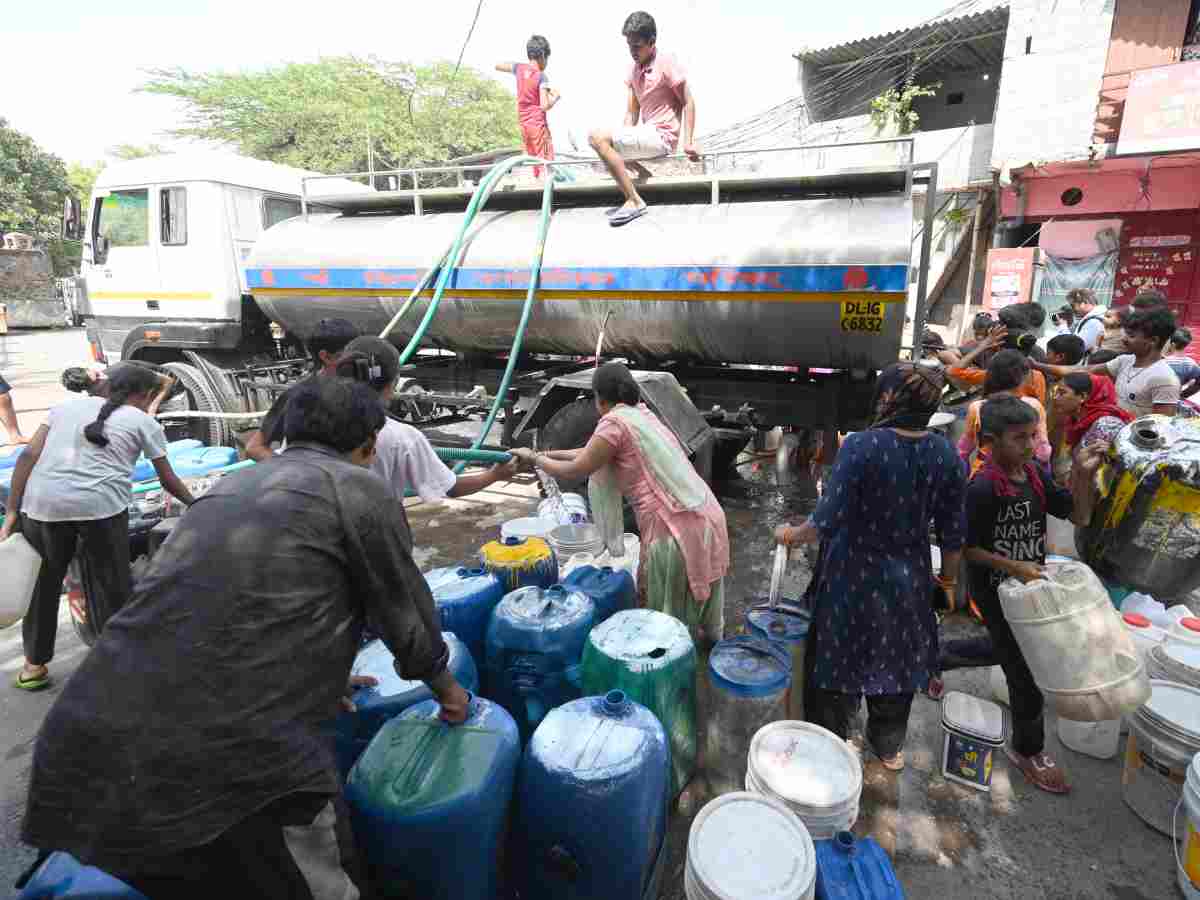
While many residents avoid using DJB pipelines due to irregular supply, others have no alternative. Residents of Humayunpur village depend entirely on this system.
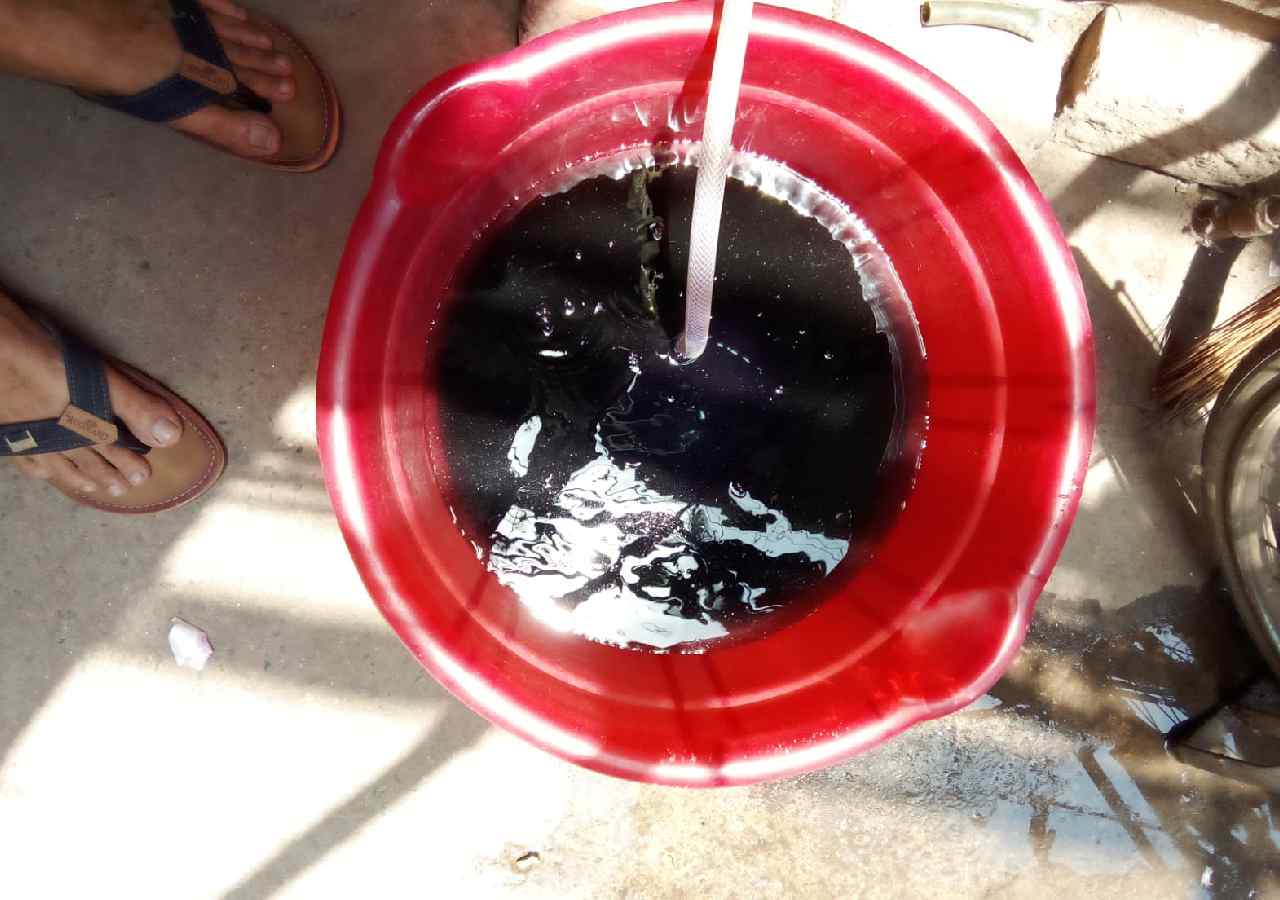
“We get water twice in a day, in the morning and in the evening for two hours. However, quite often we just have to skirt past the Jal Board’s supply since the water starts smelling. We cannot even use the brackish, black water for washing; drinking it is not even remotely possible. The strange part is that even our water purifiers are not able to tackle the issue,” said Ramesh Tokas, a resident of Humayunpur.
Complaints surge, health concerns persist
According to a media report, the DJB has received more than 43,000 complaints regarding contaminated drinking water between 2021 and 2025.
While the utility confirmed the high volume of reports, it claimed to hold no specific records or documents concerning illnesses or adverse health effects linked to its water supply, stating that it could only provide information already available on record.
The figures reveal a sharp surge in dissatisfaction, with complaints rising from 2,549 in 2021 to 12,286 in 2022. Daily reports increased from seven to approximately 34. Since then, the numbers have remained high, with over 9,300 complaints recorded annually in both 2024 and 2025—an average of roughly 26 reports of contaminated water every day over the past two years.
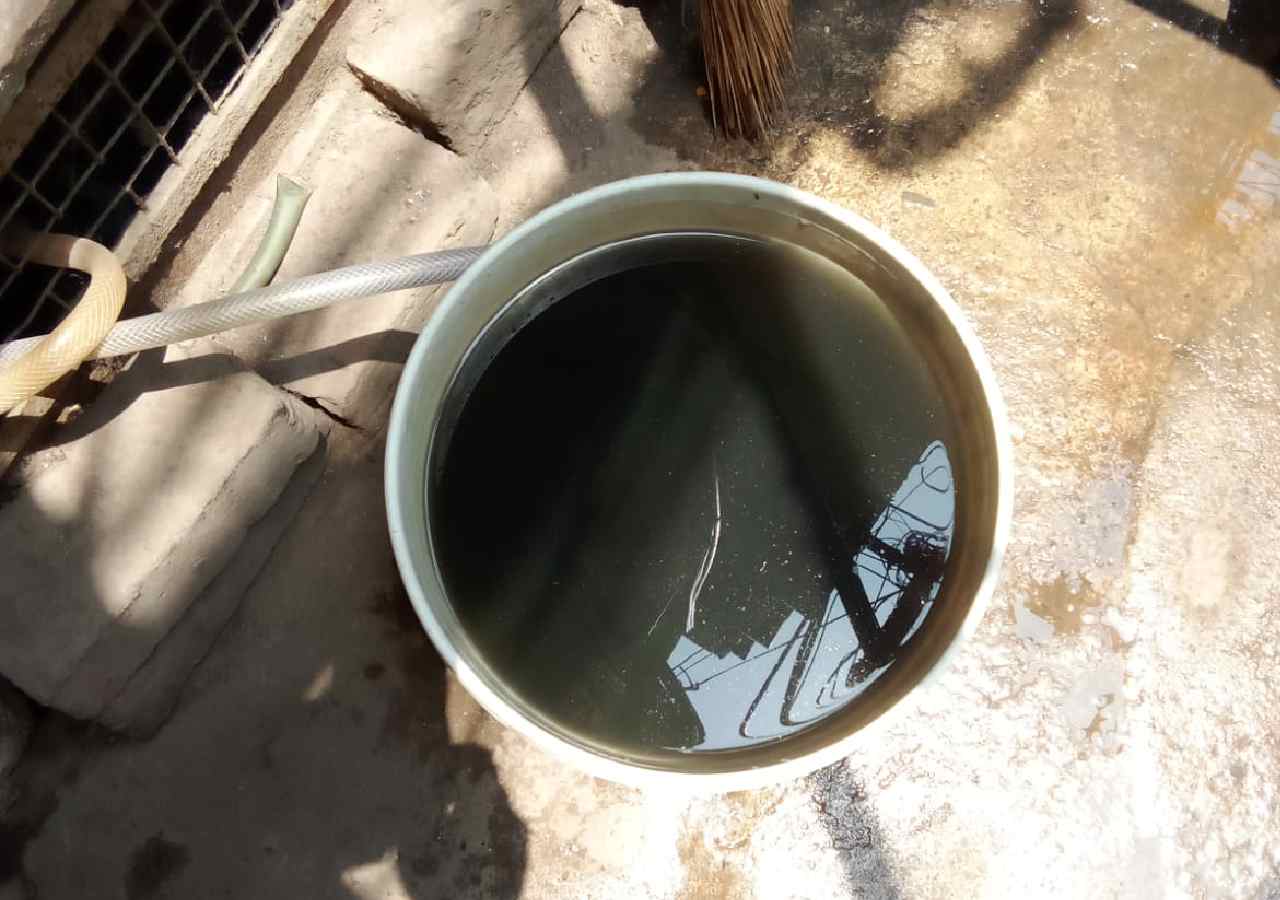
Pushkar Pawar, a Delhi-based urban planner, illustrated that much of Delhi’s water is polluted or contaminated owing to leaks in pipelines. “Many residents report that they do not always receive proper potable water through the government’s pipeline system. The water reaching some households is sometimes discoloured, has an unusual odor, or is considered unsafe for direct consumption,” he said. “Industrial activity near residential areas may be one of the contributing factors. In several industrial zones, carry out operations involving paints, chemicals, and oils. Activities such as spray painting, equipment washing, and cleaning of machinery are often conducted in open spaces. Wastewater containing paint residues, solvents, and oil may enter nearby drains, which carry industrial effluents through the local drainage network.”
Moreover, he added that open paint work may also cause such contamination since during spray painting, paint particles may settle on surrounding surfaces. ”When these areas are washed or when rainfall occurs, the particles can be swept into roadside drains along with runoff water, allowing contaminated water to move through the drainage system,” he said.
“In many parts of Delhi, drinking water pipelines run close to drainage channels or sewer lines. Over time, aging pipelines may develop cracks, corrosion, or leakage. When this happens, contaminated water from drains or sewage lines can seep into the water supply network.”
The severity of the situation was underscored in May 2025 when the National Green Tribunal reprimanded the DJB following allegations from Janakpuri residents that sewage had seeped into the drinking water supply due to heavily corroded pipes and blocked sewer lines.