
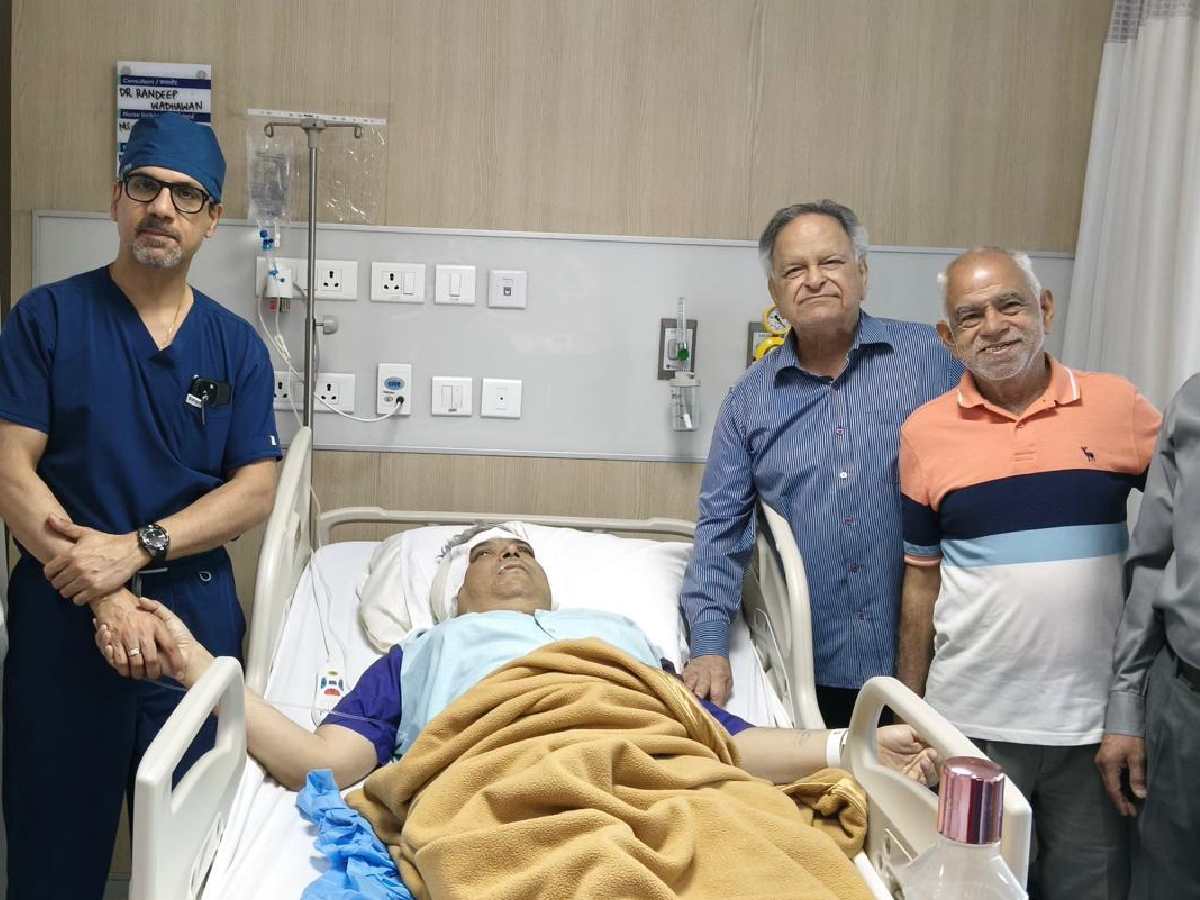
In a rare and complex medical case, Max Super Speciality Hospital in Dwarka, New Delhi, has successfully restored hearing in both ears of a blind patient with schizophrenia through cochlear implant surgery. The procedure marked a significant breakthrough for a patient who had lost both vision and hearing, leaving him almost completely disconnected from his surroundings.
The surgery was performed on a 52-year-old man from New Delhi who had lost his vision seven years ago due to an untreated cataract. Since then, he had relied heavily on his sense of hearing to navigate daily life. However, a recent viral infection led to a rapid decline in hearing, progressing to profound hearing loss of over 90 per cent in both ears.
The procedure was led by Dr Sumit Mrig, Director and Unit Head of ENT and Cochlear Implant Surgery at Max Super Speciality Hospital, Dwarka. Given the patient’s schizophrenia and dual sensory impairment, routine diagnostic procedures posed a challenge. Critical tests, including MRI scans and Brainstem Evoked Response Audiometry (BERA), had to be conducted under sedation to accurately assess inner ear function and hearing nerve response.
Following detailed evaluation, a multidisciplinary team comprising specialists in ENT, anaesthesia, audiology and psychiatry proceeded with bilateral cochlear implantation. Special care was taken during anaesthesia to avoid medications that could aggravate psychotic symptoms. The surgery utilised Cochlear’s CI532 perimodiolar electrode array, designed to sit closer to the hearing nerve and deliver sound signals more efficiently with minimal electrical current. This approach helps preserve residual hearing and improves sound clarity, particularly in noisy environments.
In a notable step, doctors activated the sound processor just three days after surgery, following the early switch-on protocol considered a global best practice. In India, activation is typically carried out after three to four weeks. Early activation allows patients to begin adapting to sound much sooner, accelerating the rehabilitation process.
Also Read: Asthma cases rise among children in North India amid seasonal shift
The patient has already begun responding to sounds, marking the first stage of recovery. “This was a highly challenging yet rewarding case,” said Dr Mrig. “Managing a patient with dual sensory impairment and a psychiatric condition requires meticulous planning and teamwork. With structured therapy and device programming, he will gradually learn to interpret and adapt to auditory inputs.”
Doctors said the case underscores how advanced medical technology, combined with coordinated multidisciplinary care, can address even the most complex clinical conditions. It also highlights the growing role of cochlear implants in restoring quality of life for patients with severe sensory impairments.