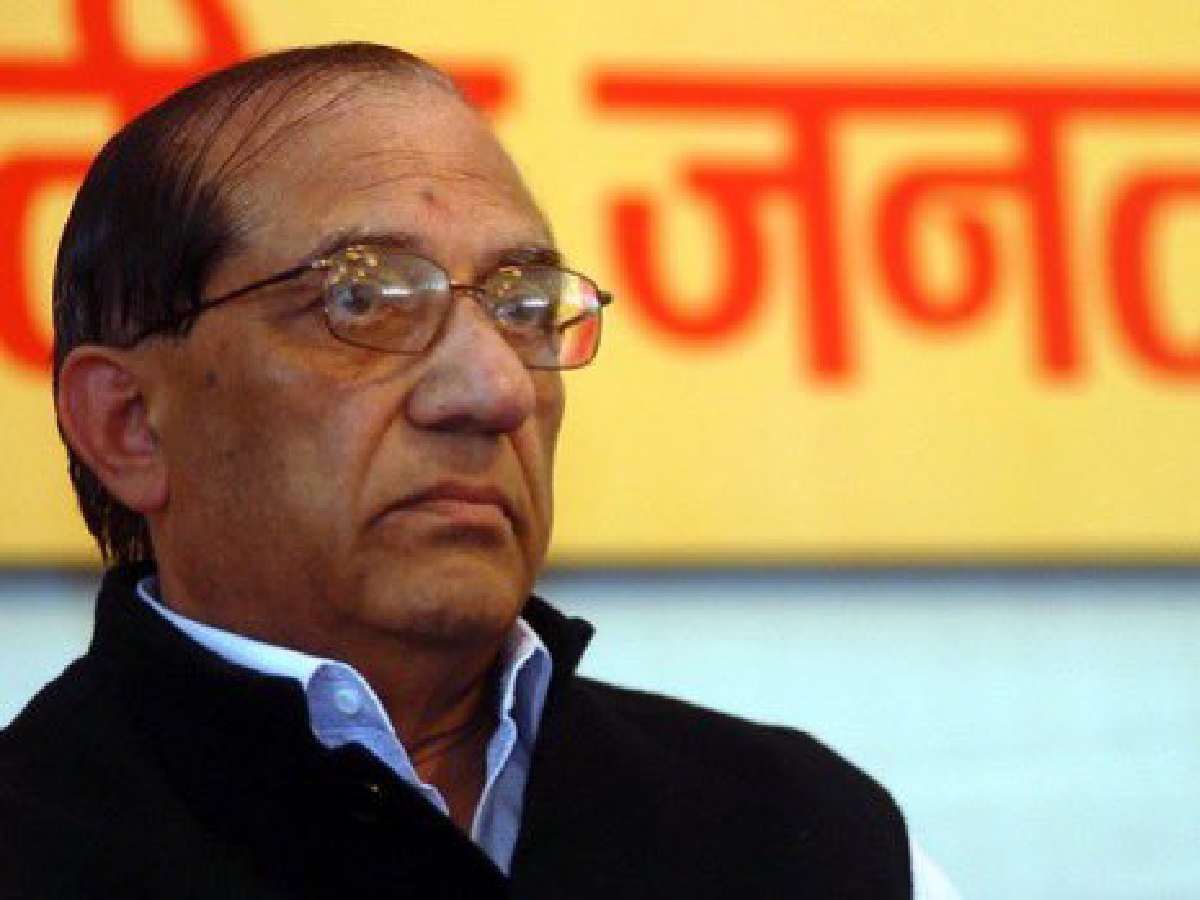
If you are travelling from Kirti Nagar or Moti Nagar towards Patel Nagar, you will notice a plaque on the left side of the Shadipur Flyover. It states that the foundation stone of this flyover was laid by Vijay Kumar Malhotra, the Chief Executive Councillor of Delhi. He used to get emotional seeing it from a distance.
Vijay Kumar Malhotra passed away on September 30. With his demise, the era of early leaders of Jan Sangh and BJP in Delhi, including Kedar Nath Sahni, Balraj Madhok, and Madan Lal Khurana, has come to an end.
Delhi’s first flyover
Malhotra often narrated the story of the construction of the Shadipur Flyover in detail. It was Delhi’s first flyover, and he played a significant role in its development. Its completion transformed the lives of thousands of residents in Moti Nagar, Kirti Nagar, Ramesh Nagar, Raja Garden, Rajouri Garden, and surrounding areas, making their journey to other parts of Delhi much easier.
The flyover was built in 1970, with construction beginning in late 1967. Since then, countless flyovers have been constructed in the Capital, and more continue to be built.
Railway line beneath
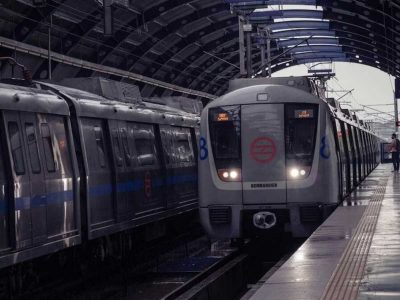
There was, and still is, a railway line beneath the Shadipur Flyover. The level crossing gates would close half to three-quarters of an hour before a train’s arrival. Even after the train passed, there was no hurry to reopen the gates. Sometimes, the gates remained closed for one to two hours as another train was due.
As a result, hundreds of people would stand on either side of the crossing, cursing their fate. For residents of Moti Nagar and beyond, travelling to Patel Nagar or further was a challenge. Trilokdeep, the former editor of Dinman and Sunday Mail, would reminisce about those times whenever he drove over the Shadipur Flyover, returning to normalcy once he crossed it.
A few months after the Shadipur Flyover, the INA Colony Flyover was also built, providing relief to south Delhi residents. During that era, Delhiites would stand on the INA Flyover and watch the bustling activity at Safdarjung Airport with great interest. That flyover too was built thanks to Malhotra’s efforts.
From Lahore to Delhi
Malhotra moved to Delhi with his family from Lahore after the partition of India. He was only 16 but already politically aware. He embraced Delhi as his own from the very first day.
Over the decades, he served as a metropolitan councillor, Chief Executive Councillor (equivalent to Chief Minister), and Member of Parliament. He was intimately familiar with every corner of the Capital. Former Delhi Chief Minister Madan Lal Khurana used to say that no one knew Delhi better than Malhotra and Jagmohan. Coincidentally, Jagmohan’s surname was also Malhotra, and both families once lived in Patel Nagar.
Malhotra was present at the Jan Sangh foundation day celebration held at Raghumal Arya Kanya Vidyalaya behind Shivaji Stadium in Connaught Place on October 21, 1951.
The Ring Road vision
Malhotra served as Delhi’s Chief Executive Councillor from 1967 to 1972. During his tenure, in 1968, he proposed the idea of the Ring Road to the then Lieutenant Governor AN Jha, who welcomed it. Together they met Prime Minister Indira Gandhi, who immediately approved the proposal.
Construction of the Ring Road began soon after and was completed by the end of 1971. Malhotra once told this writer that the idea was to allow trucks from other states to pass through Delhi without entering the city. Another aim was to enable residents of nearby colonies to easily access the Ring Road and reach their destinations by bus.
Back then, few Delhiites owned cars, so the Ring Road was described as an ocean of connectivity. During his tenure, around one and a half dozen colleges were also established in the capital.
Political battles
In the 1999 Lok Sabha elections, Malhotra defeated Manmohan Singh in the South Delhi constituency. Contesting on a BJP ticket, he secured 52.2% of the votes, defeating Singh, who received 46.2%, by a significant margin. It was Manmohan Singh’s first Lok Sabha election.
Senior journalist Bikram Upadhyay, who covered the election, noted that Malhotra never resorted to cheap accusations against Singh during the campaign, maintaining a dignified and graceful persona.
Earlier, in the 1972 Delhi Metropolitan Council election, Professor Malhotra had defeated Savita Behen, the mother-in-law of actor Manoj Kumar, in the Patel Nagar constituency.
Also Read: 70 Years of SIS: JNU’s global powerhouse marks a milestone
“Savita Behen was a prominent Delhi Congress leader. What was even more remarkable than her defeat was that Prime Minister Indira Gandhi campaigned for her. After India’s decisive victory over Pakistan in the 1971 war, the mood was in favour of Congress and Indira Gandhi. Despite this, the Congress candidate lost to Vijay Kumar Malhotra in Patel Nagar,” said Ramakant Goswami, a cabinet minister in the Sheila Dikshit government.
A family legacy
Malhotra’s father, Kaviraj Khazan Chand, established Quetta DAV School in East Nizamuddin. He treated patients at his office in Chandni Chowk. Khazan Chand was a renowned hakim in Lahore but preferred to use the title “Kaviraj” instead of “Hakim.”
With the death of Vijay Kumar Malhotra, Delhi has lost someone who deeply loved this city.