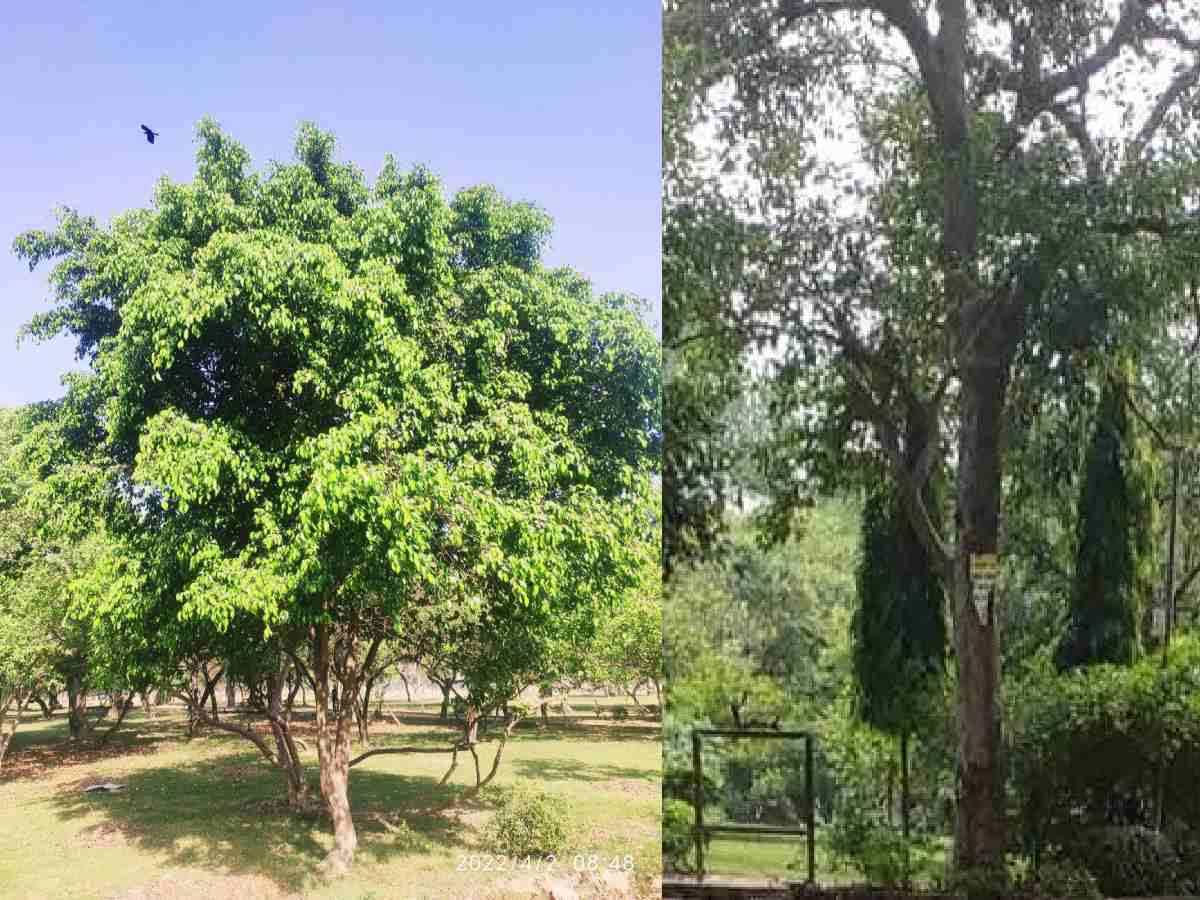
The sweet aroma of mangoes wafts through the air, lifting spirits and spreading cheer. From INA Market to IPEX, and from Delhi-6 to Lodhi Garden, the king of fruits is now in season. These are still the early weeks of summer, and a wider variety of mangoes will soon flood the markets. Delhiites, as always, eagerly await mangoes arriving from different parts of the country.
Perhaps not many people know that one of Delhi’s best-kept secrets lies in Shalimar Bagh, a sprawling residential colony in north-west Delhi. The area still has roughly 300 mature mango trees, predominantly varieties like Dussehri, Langra, and Chausa. Locals and visitors alike continue to enjoy both their shade and seasonal fruit.
Travel writer and local resident Pavan Jindal says he has been enjoying the mangoes of Shalimar Bagh since childhood.
“These mango trees are among the last surviving mango orchards of Delhi. People used to pluck raw mangoes from the trees to make pickles, which meant very few ripe mangoes were left behind. But the ones that remained were incomparable in taste and sweetness,” he said.
“I remember people would come here just to see these mango trees. It was in Shalimar Bagh that Mughal Emperor Aurangzeb was crowned. Naturally, it is a deeply historic place with strong Mughal links.”
Gardens and orchards
Further south, Lodhi Garden stands as another reminder of this horticultural heritage. Amid fifteenth- and sixteenth-century tombs and manicured lawns, old mango trees continue to provide respite from the city’s summer heat.
One particularly old mango tree near the Bada Gumbad remains especially popular among regular visitors. In July 2025, the garden hosted a nostalgic “mango party”, where visitors gathered amid the fragrance of ripe mangoes, blending memory, history, and seasonal tradition.
At the iconic Pusa campus in central Delhi, the Indian Agricultural Research Institute (IARI) continues this legacy through scientific research. The Division of Fruits and Horticultural Technology maintains dedicated mango orchards and research fields.
According to Arvind Kanva, a former staff member at Pusa, “Scientists have bred high-yielding, regular-bearing hybrids tailored for urban and semi-arid conditions.”
Every July, the institute hosts a “Pusa Mango Field Day”, attracting residents from Inder Puri, Naraina, Patel Nagar, and nearby areas.
The Delhi Development Authority (DDA) also maintains several orchards across north and north-west Delhi featuring mangoes alongside guava, ber (jujube), jamun (java plum), and other fruit-bearing trees.
In 2016, the DDA opened many of these orchards to the public, offering city residents a glimpse of rural charm in areas like Shalimar Bagh, Pitampura, Rohini, and Narela.
These green spaces also function as biodiversity hotspots, supporting birds, pollinators, and wider urban ecology while providing recreational value.
Vanishing landscapes
As recently as three decades ago, when many Raj-era bungalows still stood on Kasturba Gandhi Marg and Barakhamba Road, several of these sprawling homes had mango trees within their compounds.
Sachidanand Sahi, who once lived in the Hindustan Times House complex, recalled: “I vividly remember there were four or five mango trees on the vacant plot at Kasturba Gandhi Marg where HT House later came up. I enjoyed the mouth-watering mangoes from those trees. Once construction of the HT House started, they were cut down.”
Delhi also once had extensive mango orchards in Mehrauli, while Roshanara Bagh was also known for its mango trees.
It is believed that during the reign of Mughal Emperor Akbar Shah II (1760–1837), father of Bahadur Shah Zafar, large mango orchards were developed across Mehrauli. These orchards became known as Andheria Bagh because the trees were so dense that sunlight barely reached the ground. The area is today known as Andheria Mor.
“The orchards spread across the Mehrauli region. Until the 1960s, they remained accessible. Families would picnic there, and contractors leased the orchards to sell mangoes. People could pluck and eat mangoes directly from the trees. Popular varieties included Saroli, Dussehri, Langra, and Chausa,” said Mehrauli-based social worker Rajinder Kumar.
Later, many orchards were converted into farmhouses to benefit from agricultural tax exemptions. Some old mango trees still survive within private farmhouses. The area around Chhatarpur Metro station remains one of the last visible reminders of these historic orchards.
Living heritage
Roshanara Bagh was built in the 1650s by Roshanara Begum, daughter of Emperor Shah Jahan, in present-day Shakti Nagar. Like many Mughal gardens, it once contained fruit-bearing trees such as mango, lemon, and orange because the sale of fruits helped maintain the gardens.
Today, the bagh is better known for its ornamental plants, greenery, and lake, though several mango trees still survive within the complex.
Mango trees remain a fragrant, living reminder of Delhi’s deep historical roots. These resilient trees continue to bridge the Mughal past with the frenetic present, offering shade, sustenance, memory, and a cultural anchor amid rapid urbanisation.