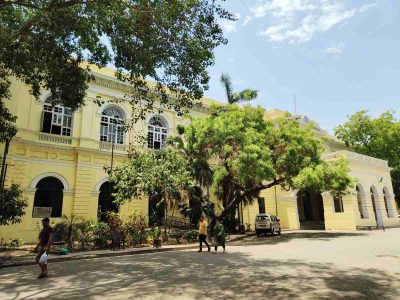
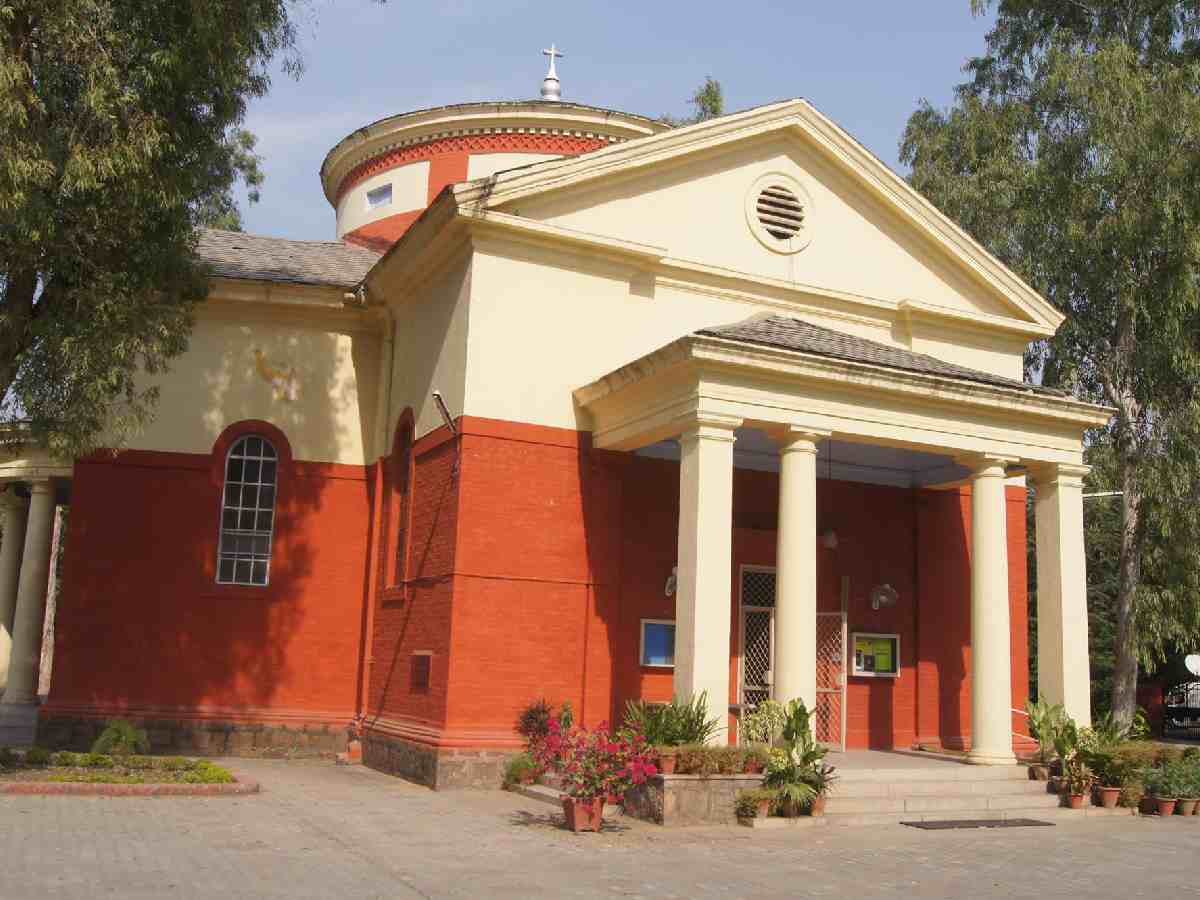
Nestled between Jantar Mantar and the busy Parliament Street — surrounded by government offices, banks and protest sites — stands the Free Church, a modest structure in Central Delhi that has witnessed a century of the Capital’s public life.
The year was 1925. India was under British rule, but the freedom movement was gathering strength. During this period, missionaries from the Church of Scotland built the Free Church, named after the Free Church of Scotland movement.
The site was chosen for its setting next to the historic Jantar Mantar observatory, an open-air astronomical instrument built in 1724 by Maharaja Jai Singh II, symbolising India’s scientific heritage. The missionaries saw the observatory as a fitting neighbour: science and faith coexisting.
“The church started small — a plain hall with white walls and a tall steeple. Made of brick and stone, it had large windows for light and simple wooden benches. No elaborate ornamentation, just a cross and a Bible at the front, reflecting the Free Church idea: faith for all, rich or poor,” says Brother Solomon George of the Delhi Brotherhood Society, currently priest of the Pitampura Church.
In the 1920s and 1930s, the church became a hub for Delhi’s small Christian community — Anglo-Indians, Scottish families and new converts from nearby neighbourhoods. Sunday services drew about 100 people who sang English hymns and studied the Bible. The missionaries also started a school, taught local children, and provided relief during floods and famines.
World War II
During the war years, Delhi saw an influx of soldiers and civilian workers. The church opened its doors wider, offering shelter and meals. After Independence, major changes followed. When the Church of North India (CNI) was founded in 1970, the Free Church became part of the new union under the Diocese of Delhi.
The 1950s saw modest expansion — new benches, a small bell tower and even a pipe organ. But as the city grew and Jantar Mantar evolved into a focal point for protests, the church, with its gate facing the main road, often felt the noise and strain of public demonstrations. Still, it remained a quiet refuge amid the tumult.
Test of time
The 1960s and 1970s were years of rebuilding. Poverty persisted, and the church strengthened its outreach. Sunday School began for children. In 1971, during the war with Pakistan, the church supported refugees from Bangladesh (then East Pakistan), offering a safe space to rest and pray.
By the 1980s, urbanisation brought fresh challenges: heavier traffic, pollution and the wear of time. The white walls turned grey, and the wooden interiors needed repairs. Yet the congregation remained committed. Pastors continued to preach messages of compassion and justice. Among the notable figures was Reverend Jai Kumar, who served for many years.
The 1990s brought both optimism and anxiety as Delhi became a global city. In 2000, the church marked its 75th year with hymns, speeches and a feast for 300 guests. It became a spiritual home for Christians from Kerala, Tamil Nadu and the Northeast who had moved to Delhi for work. Services incorporated English, Hindi and regional hymns, creating a shared sense of belonging.
Legacy of quiet light
From its missionary origins in 1925 to its centenary, the Free Church has witnessed Delhi’s transformation — from the colonial capital to a metropolis of millions. It has remained a place of calm in a neighbourhood defined by protest marches, government offices and relentless traffic.
In the heart of Lutyens’ Delhi, the Free Church stands near the Cathedral Church of the Redemption and the Sacred Heart Cathedral, both of which also draw large congregations, especially during Christmas. “As the festive season approaches, all these churches come alive with lights and worshippers. Thanks to their central location, even members of the diplomatic community prefer to pray here,” says Sushil Massey, a member of an old Christian family in Delhi.
A hundred years on, the Free Church continues to offer what it always has: a simple, steady light in a restless city.