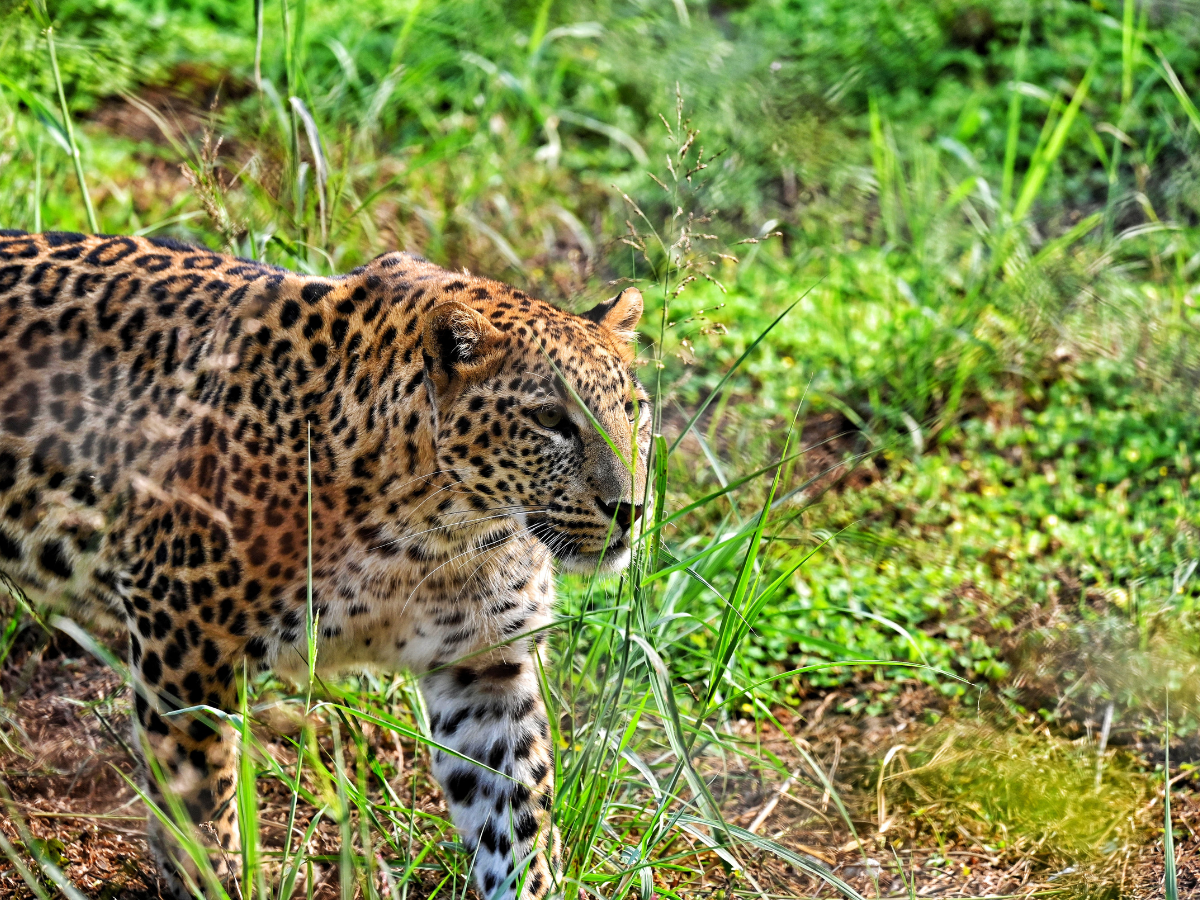
Leopard sightings have become an almost daily occurrence in Delhi’s Asola Bhatti Wildlife Sanctuary, with forest officials reporting a rise in the big cat population and frequent camera-trap recordings of leopard pairs — a development they say reflects improving habitat conditions.
Officials estimate the leopard population in and around the Asola Bhatti landscape has increased from around 12-14 animals in 2022 to about an estimated 16 at present. However, they cautioned that the figure is based on camera-trap records and field observations and can only be confirmed through a detailed census exercise.
Among the developments that have particularly excited wildlife officials are repeated sightings of leopard pairs near water bodies inside the sanctuary.
Officials said such sightings are relatively rare because leopards are generally solitary animals and are usually seen together only during courtship, mating or while raising cubs.
“A few years ago, seeing leopards this frequently was uncommon. Today, our camera traps are recording them almost every day. We are also seeing repeated sightings of leopard pairs, which is significant,” a forest official said.
The increase is not limited to leopards. Officials said sightings of spotted deer and wild boar have risen substantially, while the peafowl population has grown so much that the birds are now commonly seen occupying roads and tracks across parts of the sanctuary.
“Peacocks are visible almost everywhere now. Their numbers have increased significantly and in some stretches they can be seen across roads and pathways inside the sanctuary,” an official said.
According to officials, the rise in wildlife activity points towards a broader ecological improvement within the sanctuary. They said the growing presence of several species indicates that food, water and shelter are becoming more readily available across the landscape.
Another senior official said that species such as peafowl, francolins and deer serve as important indicators of habitat quality.
“There are certain species that we call indicator species. Their presence helps us understand whether a habitat is improving or deteriorating. An increase in species such as peafowl, francolins and deer suggests that habitat conditions are getting better,” he said.
Officials attribute the trend to a combination of habitat management measures undertaken over the past several years. More than 200 water holes have been developed and maintained across the sanctuary, ensuring year-round water availability for wildlife. At the same time, plantations carried out several years ago have matured, with many trees now forming dense canopy cover.
“The plantations undertaken in earlier years have now matured and started forming canopies. The forest is gradually becoming denser, offering more shade, cover and suitable habitat for wildlife,” an official said.
The improved habitat has also resulted in a stronger prey base. Officials said sightings of spotted deer and wild boar have increased considerably, providing favourable conditions for predators such as leopards to remain within the sanctuary.
Historically, leopards have used the Asola Bhatti landscape as part of a larger movement corridor connecting forested areas of the Aravallis in Haryana with Delhi. While such movement continues, officials say recent camera-trap records suggest some animals are now spending longer periods within the sanctuary.
“Earlier, many leopards would largely move through the landscape. We are now seeing signs that some are establishing territories within the sanctuary itself,” an official said.
Officials also believe that cubs recorded in recent years have now matured and started occupying territories of their own, contributing to the growing number of sightings being captured on camera traps.
Apart from leopards, hyenas are also being recorded during nighttime monitoring exercises.
Also Read: Delhi: 99.8% access on paper, zero pressure in the tap
Officials said the simultaneous increase in sightings of predators, prey species and indicator species presents one of the clearest signs yet that the sanctuary’s ecosystem is becoming more robust.
Forest officials further attribute the positive trend to regular patrolling, reduced tresspassing and matured plantation. Better protection, combined with improved habitat conditions, has enabled wildlife to use larger parts of the landscape more freely, they said.