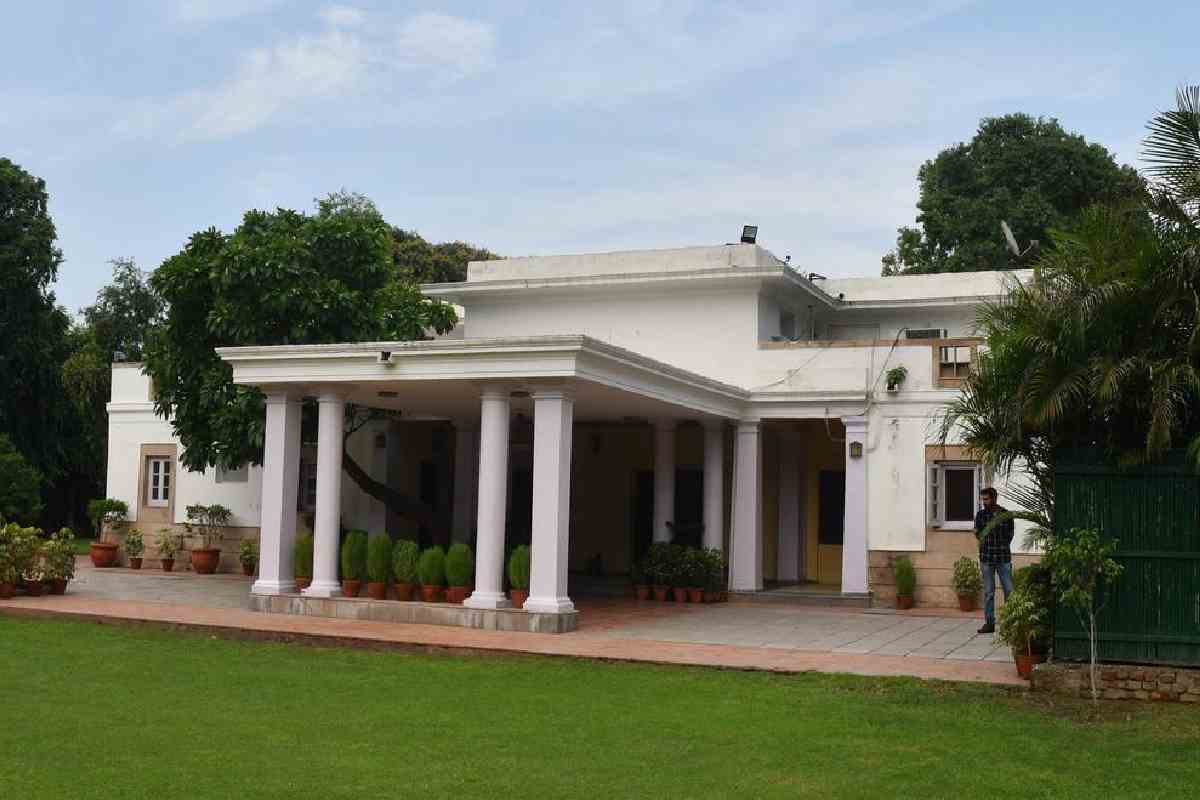
These days, much is being said about the rising cost of maintaining ministers’ bungalows in Lutyens’ Delhi. The residences are nearly a century old, and the cost of their repair, furnishing and upkeep continues to rise.
But there is another, less tangible dimension to the debate over these homes. Many bungalows in Lutyens’ Delhi have acquired an identity beyond their function as government residences. Over the years, they have become closely associated with the leaders who lived in them. An address ceases to be merely a number; it becomes another name for the person who once occupied it.
22 Prithviraj Road: BR Ambedkar’s address
BR Ambedkar lived at 22 Prithviraj Road, and the address remains closely associated with the memory of the maker of the Constitution. The bungalow is now the residence of the Ambassador of Turkey to India.
“For all those who admire Baba Saheb, this is a sacred place,” says Ravish Pipal, who hails Baba Saheb as the saviour of Dalits.
1 Safdarjung Road: Indira Gandhi’s home
In much the same way, 1 Safdarjung Road is inseparable from the memory of Indira Gandhi. She lived there for a long period, and the bungalow became an important part of her political life.
After she lost power in 1977, she moved to 12 Mother Teresa Crescent, then known as Willingdon Crescent. When she returned as Prime Minister in January 1980, she moved back to 1 Safdarjung Road.
3 South Avenue Lane: Chandra Shekhar’s place
Then there is 3 South Avenue Lane, an address that immediately brings former Prime Minister Chandra Shekhar to mind. He lived there for decades and, even after becoming Prime Minister, chose not to move to the official Prime Minister’s residence. Members of his two brothers’ families also lived there.
20 Akbar Road: the Speaker’s bungalow
The bungalow at 20 Akbar Road has, over the years, become closely associated with the office of the Speaker of the Lok Sabha. In 1925, it was allotted to Vithalbhai Patel, the first Indian President of the Central Legislative Assembly. After Independence and the formation of the first Lok Sabha, the bungalow was allotted to Ganesh Vasudeo Mavalankar. Since then, it has been the residence of successive Lok Sabha Speakers.
It is one of only two double-storey government bungalows in the Lutyens zone. Imli and amaltas trees stand around the old house, which has witnessed decades of parliamentary history.
From Lutyens to Kalam, Pranab and Kharg
Most government bungalows in Lutyens’ Delhi have only one floor. It is said that there are just two double-storey residences: 10 Rajaji Marg and 20 Akbar Road.
10 Rajaji Marg was once known as Hastings Road. Edwin Lutyens, the chief architect of New Delhi, also lived there. The road was later renamed Rajaji Marg after C Rajagopalachari, India’s second Governor-General.
Also Read: The rising expense on Lutyens’ Bungalows
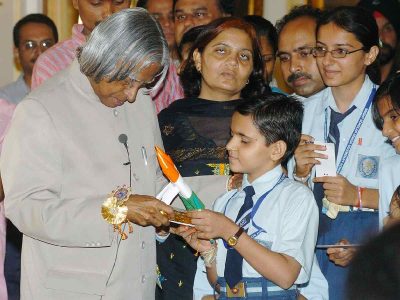
“Two former Presidents of India lived in this bungalow after they left office: APJ Abdul Kalam and Pranab Mukherjee. Kalam had a library built there to his taste. Pranab Mukherjee later moved in as well. Congress leader Mallikarjun Kharge lives there now,” says noted journalist Arvind Kumar Singh.
The story of 6 Maulana Azad Road
The bungalow at 6 Maulana Azad Road has now passed into history. From 1962 to 2024, it served as the official residence of the Vice-President of India.
S Radhakrishnan was the first Vice-President to live there. He was followed by Zakir Husain, VV Giri, Gopal Swarup Pathak, BD Jatti, M Hidayatullah, R Venkataraman, Shankar Dayal Sharma, Dr K R Narayanan, Krishan Kant, Bhairon Singh Shekhawat, Hamid Ansari and Venkaiah Naidu. Several of them later went on to become President.
A new Vice-President’s complex has since been built, leaving the old bungalow as a part of the capital’s political history. Its walls have witnessed decades of constitutional tradition.
Places of memory
These bungalows are more than buildings of brick and stone. Stories of political life have become attached to them. One address becomes associated with Chandrashekhar, another with Indira Gandhi, another with BR Ambedkar, and another with the Speaker of the Lok Sabha.
The cost of maintaining these residences may continue to rise. But the historical identities that have gathered around their addresses are not so easily erased.