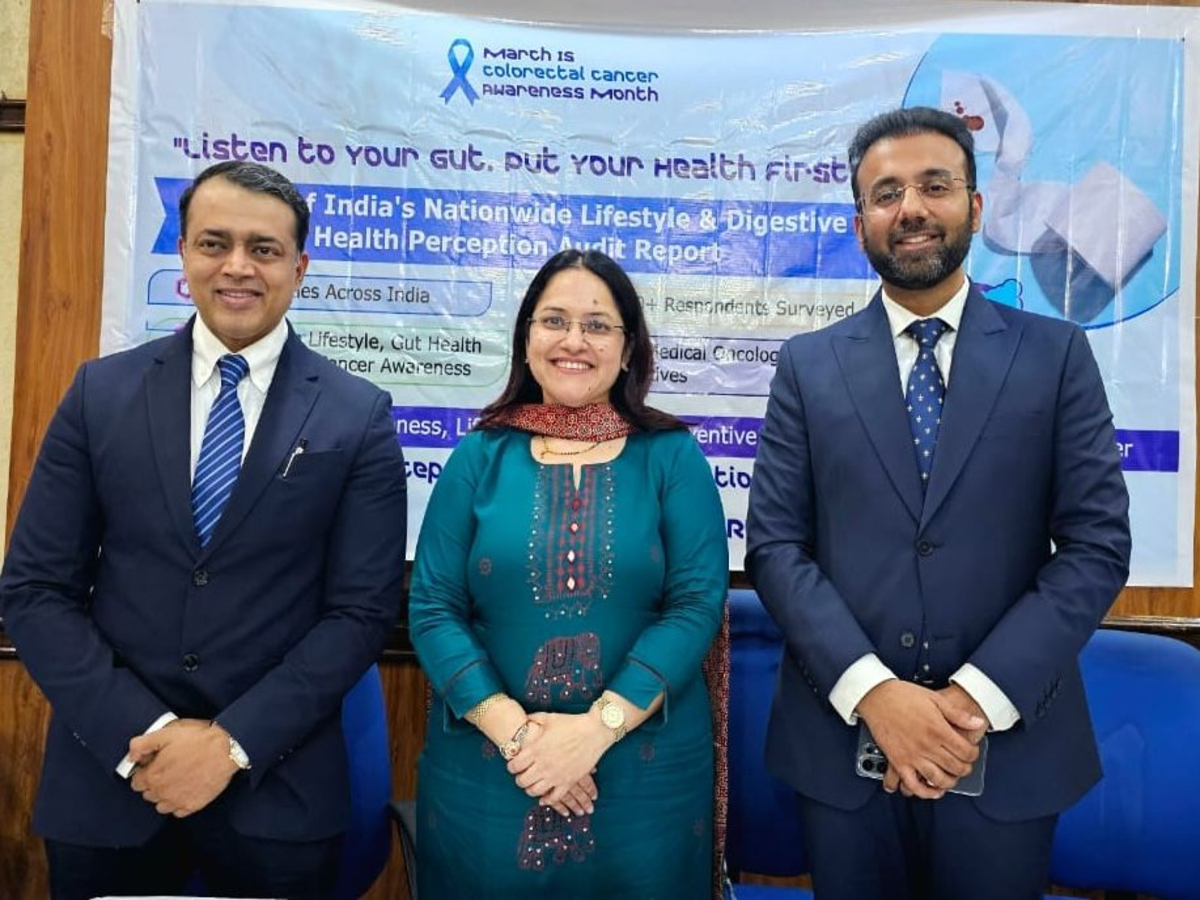
A majority of residents in Delhi remain unaware of a critical early warning sign of colorectal cancer, with over 80 per cent failing to recognise blood in stool as a symptom, according to a nationwide Lifestyle & Digestive Health Awareness Survey conducted across 14 Indian cities.
The findings, released during Colorectal Cancer Awareness Month, underline significant gaps in public understanding of digestive health and a worrying tendency to delay medical consultation, even when symptoms persist.
The survey, supported by Merck Specialities Pvt Ltd, assessed responses from 10,198 individuals aged 25 to 65 years, examining how people interpret digestive symptoms such as irregular bowel movements, acidity, and rectal bleeding. Experts say the results point to a pattern of self-management and neglect that could lead to late-stage cancer detection.
Delayed care and self-medication trends
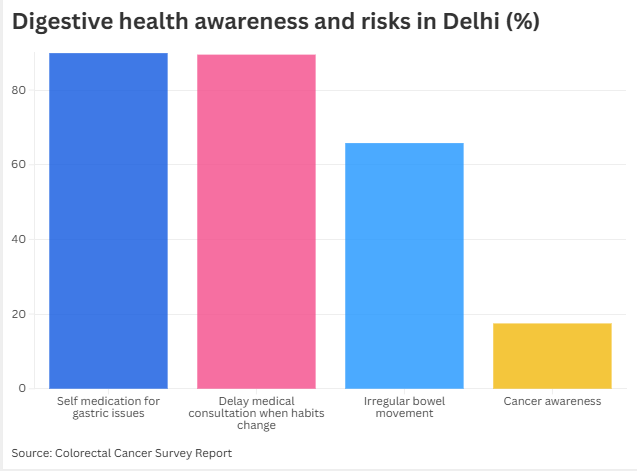
One of the most striking findings in Delhi is the reluctance to seek professional medical advice. Nearly 89.5 per cent of respondents said they would rely on over-the-counter medication or lifestyle changes if they experienced changes in bowel habits for several weeks, while only 10.5 per cent would consult a doctor.
This pattern extends even to serious symptoms. Around 40 per cent of respondents admitted they would consider self-medication in cases of blood in stool—despite it being a potentially serious indicator of colorectal cancer.
Experts warn that such delays in seeking care can significantly affect outcomes. Colorectal cancer is largely preventable and highly treatable when detected early, but late diagnosis remains common due to low awareness and hesitation in reporting symptoms.
Lifestyle risks and digestive health burden
The survey also highlights lifestyle-related risk factors contributing to digestive health issues in the city. More than 86 per cent of Delhi respondents reported frequent consumption of outside or packaged food, while only 35.5 per cent said they exercised regularly.
Digestive symptoms appear to be widespread but under-addressed. Over 65 per cent reported irregular bowel movements, and over 80 per cent experienced a sensation of incomplete bowel evacuation—both of which can indicate underlying gastrointestinal issues if persistent.
Tobacco use, another known risk factor for gastrointestinal diseases, was reported by 39.2 per cent of respondents, further compounding health risks.
Barriers to timely diagnosis
The survey sheds light on why many individuals delay medical consultation. Lack of time emerged as the most common barrier at 35.4 per cent, followed by fear (31.1 per cent) and embarrassment (17.9 per cent). Around 15.7 per cent did not consider their symptoms serious enough to warrant medical attention.
Additionally, awareness gaps extend beyond symptoms. About 80 per cent of respondents were unaware that serious digestive diseases, including colorectal cancer, can develop without pain—reducing the likelihood of early detection.
Family history of gastrointestinal conditions was reported by 25.1 per cent of respondents, yet hereditary risk remains poorly understood and under-discussed.
Also Read: India sees modest dip in pollution, but Delhi AQI remains dangerously volatile
Expert calls for early screening and awareness
“Colorectal cancer develops in the colon or rectum and often begins as small growths called polyps that can gradually become cancerous if untreated. Risk factors include unhealthy diets low in fibre, obesity, sedentary lifestyles, tobacco use, and age. Don’t miss symptoms such as persistent bowel habit changes, blood in stool, abdominal discomfort, fatigue, or unexplained weight loss. Colorectal cancer is highly treatable when detected early through screening methods such as colonoscopy,” said Dr Manish Singhal, Vice Chairman, Medical Oncology, Yashoda Medicity, Delhi.
“The data from Delhi highlights a very high delay in seeking medical consultation, with a large proportion of individuals ignoring early changes in bowel habits and relying on self-medication for relief. This pattern can lead to delayed diagnosis and poorer treatment outcomes. Even mild or recurring digestive symptoms should not be overlooked, as timely medical evaluation plays a crucial role in early detection and appropriate treatment,” said Dr Shefali Sardana, Lead Consultant, Medical Oncology (GI and Gynae Oncology), Indraprastha Apollo Hospitals.
Highlighting the role of lifestyle, Dr Aditya Sarin, Consultant Medical Oncology, Sir Ganga Ram Hospital, said, “Frequent consumption of processed or outside food, lack of physical activity, tobacco use, and obesity can increase the risk. Adopting healthier habits such as a fibre-rich diet, regular exercise, avoiding tobacco, and undergoing routine screening can reduce the risk of colorectal cancer and improve overall digestive health.”
“The findings are concerning, especially the lack of awareness that blood in stool can be an early sign of colorectal cancer. Many patients tend to ignore or self-medicate such symptoms, which delays diagnosis. Colorectal cancer is highly treatable if detected early, and timely screening like colonoscopy can make a significant difference in outcomes,” said Dr Puneet Gupta, Chairman, Oncology Services, Asian Hospital.
Need for behaviour change and public awareness
The findings point to an urgent need for stronger public health messaging around digestive health, particularly in urban centres like Delhi where fast-paced lifestyles and dietary habits are contributing to rising risk.
Experts recommend adopting healthier habits, including a fibre-rich diet, regular physical activity, and avoiding tobacco. More importantly, they stress the need to move away from self-medication and towards timely medical consultation when symptoms arise.
As awareness campaigns gain momentum, clinicians say bridging the gap between symptom recognition and medical action will be critical in reducing the burden of colorectal cancer and improving survival outcomes.
Read More: Delhi: Doctors perform kidney transplant on HIV-positive patient